
November 19, 2026
How to connect Fork + Farm to your Calgary team’s morning schedule

Instead of rebuilding breakfast plans across emails and calendar invitations, connect your Calgary team’s morning schedule to one shared catering brief, then confirm the arrangements directly with Fork + Farm. This guide shows you how to align room access, guest arrival, food service and the meeting agenda without treating a calendar invitation as a confirmed catering booking.
- Fork + Farm suits Calgary teams seeking full-service, from-scratch corporate catering with personal event planning.
- For breakfast catering Calgary planning, connect your meeting agenda to a shared catering brief before confirming arrangements.
- Separate building access, breakfast service and meeting start times so everyone works from the same sequence.
- Confirm each recurring breakfast separately unless an ongoing arrangement has been expressly agreed.
Why this matters
A meeting invitation tells colleagues when to arrive. It does not tell a caterer where to enter, who can open the room or when the presentation needs everyone seated. Those details belong together, with someone responsible for keeping them current.
Fork + Farm is best for Calgary teams seeking full-service, from-scratch corporate catering. The next step is a conversation about your particular breakfast, rather than an assumption about menus, service arrangements or dates. Start with Fork + Farm and use the workflow below to prepare that conversation.
For your 2026 morning events, the practical goal is simple: give the hospitality plan a place in the agenda, instead of fitting it around the edges after the meeting is scheduled.
Before you start
- Gather the planning materials. Have your meeting invitation, expected attendance, venue address, room details and proposed agenda ready. Ask who can confirm building access and room use.
- Assign responsibility. Choose a meeting organizer, an onsite contact and a person authorized to agree catering arrangements. One person can hold several roles, but everyone should know who makes the final decision.
- Check the access constraint first. A building opening time is not necessarily the time your event room becomes accessible. Verify reception procedures, entry instructions and any loading or lift requirements before proposing a service time.
This is a coordination workflow, not a software integration. The bold labels below are suggested headings for your own document; they are not buttons, booking fields or features of a Fork + Farm platform.
Configuration 1: Your shared morning brief
Start with the information that stays useful even when the meeting moves. A short, clearly maintained brief gives your colleagues and catering contact a common reference without making everyone search a message thread.
- Create the brief. Name a shared document for the event and its date. For example, use 2026 leadership breakfast — event brief, then identify the organizer responsible for keeping it accurate.
- Add Event essentials. Record the date, venue, room, expected attendance and purpose. Distinguish a working breakfast from a welcome gathering before a presentation; the food needs a different place in each agenda.
- Add Access details. Include the confirmed entrance, room-access arrangements and onsite contact. Keep unresolved points visibly marked as questions rather than presenting them as instructions.
- Add Dietary requirements. Request the information needed for catering planning through an appropriate private channel. Share relevant requirements with the catering contact without putting colleagues’ personal details in a widely circulated invitation.
- Add Decisions and confirmations. Separate what you are requesting from what has been agreed. Record the date and source of each confirmation so an internal preference does not become an apparent supplier commitment.
Expected result: another organizer can read the brief and identify the event, the responsible contacts and every outstanding question without reconstructing the conversation.
Keep the guest invitation lighter. Colleagues need the location, arrival instructions and meeting agenda; they do not need the full operational discussion about access and setup.
Configuration 2: Your breakfast-to-meeting sequence
Work backwards from the moment the meeting requires everyone’s attention. Then discuss the earlier access and service arrangements with your venue and catering contact, rather than choosing them independently.
- Set Meeting start. Identify when the presentation, training or discussion actually begins. Do not use the same label for the time guests are invited to arrive.
- Set Guest arrival. Decide whether colleagues gather before the formal agenda or arrive directly for a working session. Give breakfast an explicit place in that choice.
- Propose Breakfast service. Ask when food service should begin and how it will fit the room and agenda. Confirm the menu and service approach directly; do not build the schedule around an unconfirmed format.
- Confirm Room access. Ask the catering contact what preparation access is needed, then verify that arrangement with the venue. Do not substitute a guessed setup allowance.
- Agree Service finish. Decide how any remaining service activity and clearing will fit around speakers, confidential discussions or the room’s next use.
Expected result: your agenda distinguishes access, hospitality and formal meeting time, with each operational arrangement confirmed by the person responsible.
For illustration, a 2026 team breakfast might invite guests at 8:30 a.m. and begin the presentation at 9:00 a.m. That creates a proposed 30-minute welcome window; it is not a catering setup allowance or a promise that a particular service format fits. Confirm the practical sequence before sharing the final invitation.
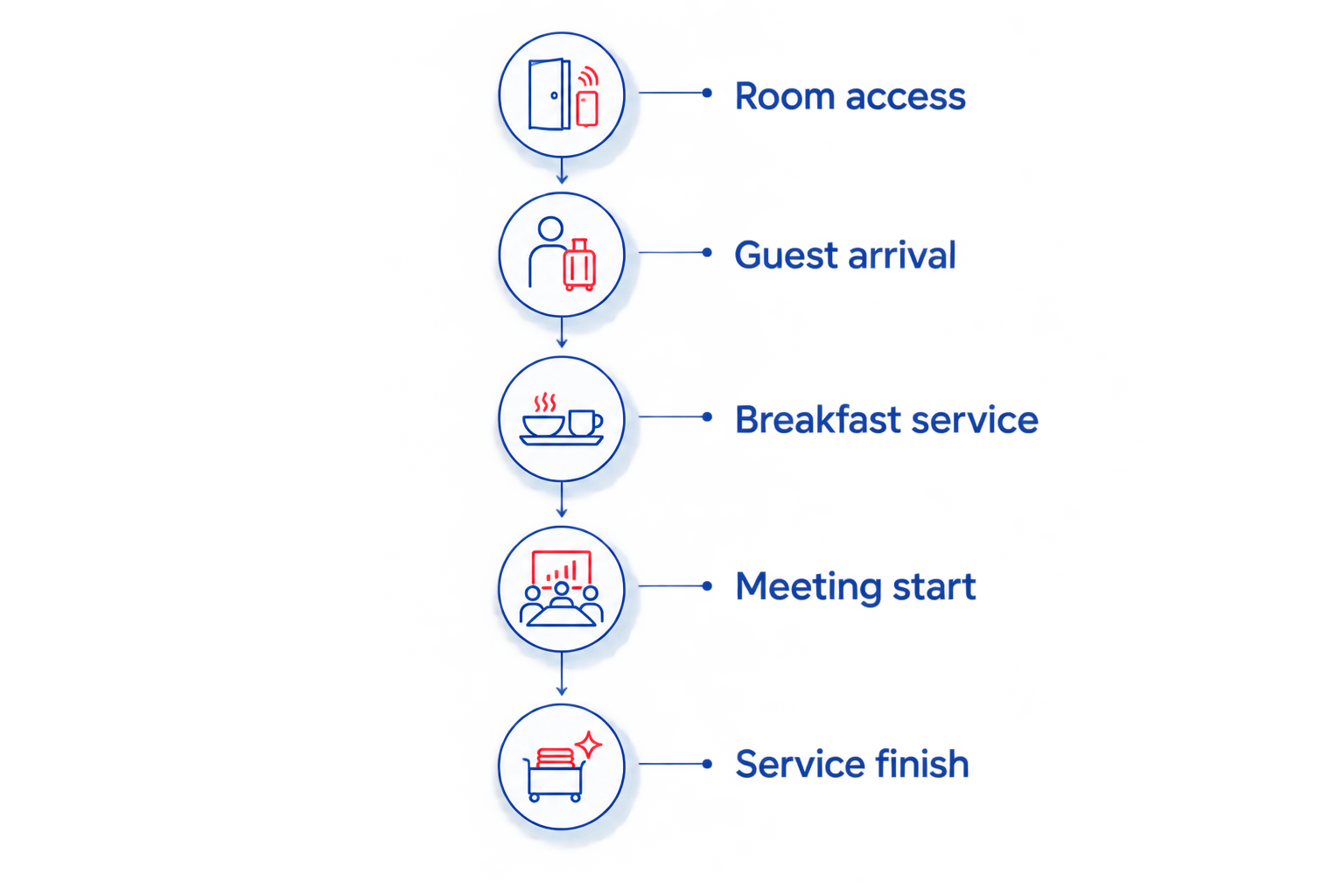
The order needs to reflect your event. If breakfast service begins before guests arrive, move that item accordingly; if breakfast continues during discussion, record the overlap explicitly. The useful part is the distinction between activities, not a rigid template.
Configuration 3: Your catering enquiry and confirmation
Once the brief describes the morning clearly, turn it into an enquiry. A thoughtful opening message gives the catering conversation something concrete to work with while leaving room for advice.
- Send the event essentials. Use Get Started to begin the conversation. Include your proposed date, Calgary or Southern Alberta location, attendance estimate and the purpose of the breakfast.
- Explain the morning’s rhythm. Describe whether guests will mingle, sit through a presentation or move into smaller discussions. Share the proposed service window and any fixed agenda commitments.
- Ask about the service details. Discuss menu choices, dietary requirements, staffing, setup, clearing and any equipment responsibilities relevant to your event. Treat these as questions until the arrangements are agreed.
- Return the agreed details to the brief. Record the confirmed scope and timing, together with anything still awaiting a decision. Follow the confirmation process supplied for your event rather than assuming an enquiry reserves a date.
- Update the guest invitation. Publish the relevant arrival and meeting information only after checking it against the agreed operational plan.
Expected result: the catering conversation and your internal schedule describe the same event, with requests clearly separated from confirmed arrangements.
Fork + Farm’s full-service, from-scratch approach is relevant when you want catering to be part of the event experience. The planning trade-off is coordination: you still need to settle access, guest requirements and responsibilities directly. Full-service catering does not replace your organization’s authority over its building or agenda.
Configuration 4: Your internal handover
A well-planned breakfast should not depend on the organizer being the first person through the door. Give the onsite contact enough information to welcome the catering team and resolve practical questions.
- Name the onsite lead. Record who will be present, how that person can be reached and who takes over if plans change.
- Walk through the room plan. Check the proposed service location against guest movement, presentation equipment and accessible routes. Ask the venue and catering contact to resolve any competing uses of the space.
- Separate guest and operational messages. Send colleagues the arrival information they need. Give the onsite lead the access instructions, agreed sequence and relevant supplier correspondence.
- Check the current version. Before the event, compare the brief, invitation and latest catering confirmation. Resolve differences rather than leaving the onsite lead to choose between them.
Expected result: the onsite lead knows what has been agreed, which questions remain and who can authorize a change.
For a 2026 Christmas breakfast, include decorations, presentations and any room changes in the same handover. A festive gathering still needs a clear route into the room and a shared understanding of when hospitality gives way to the programme.
When your morning schedule changes
A recurring breakfast and a single-event breakfast need different update habits. Choose the workflow that matches how your team meets; neither removes the need for direct confirmation.
| Workflow | Best for | Advantage | Limitation | Recommended approach |
|---|---|---|---|---|
| Single-event brief | A presentation, training morning or client gathering | Keeps decisions tied to one event | The brief needs revising if the agenda changes | Maintain one current brief and communicate changes directly |
| Recurring-event template | A repeated team breakfast | Keeps useful questions and responsibilities consistent | Attendance, access and catering arrangements still need checking for each date | Copy the structure, then confirm each event’s details |
For a recurring 2026 meeting series, keep the template separate from the event records. Reuse the questions, not the assumption that last month’s menu, timing or arrangements automatically apply again.
When an event changes, follow this sequence:
- Identify the change. State whether the date, attendance, room, dietary requirements or agenda has changed.
- Contact the affected people. Tell the catering contact and venue contact directly where the change affects their arrangements. An edited calendar invitation is not a substitute.
- Request confirmation. Ask what the change means for the agreed plan and which details need reconsidering.
- Publish the revised brief. Update the event record after agreement, and make the latest version clear to the onsite lead.
The same approach works when a breakfast becomes a longer corporate event with lunch. Treat the expanded hospitality as a new discussion, not an automatic extension of the morning arrangement.
Troubleshooting
The meeting time changes after catering is agreed
Contact the catering team before treating the new agenda as settled. Explain which times are fixed and ask whether the proposed change can be accommodated; then update the venue, brief and guest invitation to match the confirmed plan.
Guests arrive before the room is ready
Check whether the invitation confused building entry with room readiness. Arrange a suitable arrival plan with the venue, and give the onsite lead clear instructions about welcoming guests without directing them into active setup.
Dietary information arrives late
Pass the information to the catering contact promptly and ask what can be accommodated. Do not promise a particular dish or an allergen-free environment on the caterer’s behalf; communicate the confirmed response privately to the affected guest.
Nobody knows who handles setup or clearing
Return to the agreed scope and identify each responsibility explicitly. Record who provides relevant equipment, who prepares the service area and who handles clearing, rather than relying on the phrase full-service to answer every operational question.
A calendar update is mistaken for supplier confirmation
Separate your internal scheduling from the catering correspondence. Ask for direct acknowledgement of the revised arrangements and record the response in the brief; a changed invitation alone does not confirm a changed catering plan.
Customize your workflow
Build your next event around what guests need from the morning. A team welcome, a client presentation and a corporate holiday breakfast deserve different pacing, even when they take place in the same room.
For Fork + Farm corporate catering enquiries, describe that purpose alongside the practical details. Explain whether conversation, concentration or celebration should lead the experience, then discuss the menu and service arrangements that support it.
For your next 2026 planning cycle, keep a reusable brief with blank fields for access, attendance, dietary requirements, service timing and responsibilities. Leave event-specific confirmations behind when you copy it. A useful template carries the questions forward without carrying old assumptions with them.
FAQ
How do I connect Fork + Farm to our morning meeting schedule?
Connect your meeting agenda to a shared catering brief, then confirm the arrangements directly with Fork + Farm. Include the proposed date, venue, attendance, access details and breakfast timing; this is a planning workflow, not a software connection.
What should I include in a breakfast catering Calgary enquiry?
Include your proposed date, location, expected attendance, meeting purpose and preferred breakfast timing. Share known dietary requirements and explain any room-access constraints so the catering conversation addresses the actual morning.
Does adding the caterer to a calendar invitation confirm the booking?
No, a calendar invitation is not a catering confirmation. Follow the confirmation process supplied for your event and keep the agreed arrangements alongside your internal agenda.
How much time should we leave between breakfast and the meeting?
Set the interval around your agenda and the service arrangements agreed with your caterer. Distinguish guest arrival from the formal meeting start, and confirm preparation access separately rather than using the welcome window as setup time.
Can we reuse the same plan for a recurring office breakfast?
Yes, reuse the document structure, but check the details for every event. Confirm attendance, room access, dietary requirements and catering arrangements instead of assuming the previous event’s plan carries over.
Can this workflow work for a corporate Christmas breakfast?
Yes, the same brief can coordinate a corporate Christmas or holiday breakfast. Add presentations, decorations and room-use changes to the agenda, then discuss the proposed occasion and catering arrangements directly.
One last thing
Keep the welcome window separate from the setup window. They can look like the same gap on a calendar, but one belongs to your guests and the other supports the work needed before they arrive. Naming both makes the final conversation clearer—and leaves your onsite host free to offer a warmer welcome.
Related guides
- Brief your Calgary corporate caterer on event logistics
- Plan breakfast catering for an early Calgary meeting
- Explore Calgary corporate Christmas reception catering


