
November 9, 2026
How to brief your Calgary corporate caterer on event logistics

Brief your Calgary corporate caterer with a written plan covering venue access, guest numbers, dietary requirements, service timing and who makes decisions on the day. For your 2026 event, separate confirmed details from open questions, then ask the caterer and venue to confirm their responsibilities before you circulate the final schedule.
- Corporate catering Calgary event logistics start with a shared brief covering access, guests, timing and responsibilities.
- Fork + Farm suits Calgary teams seeking full-service, from-scratch corporate catering.
- Separate arrival, setup and guest service times; they are different parts of the schedule.
- Confirm dietary arrangements and venue restrictions directly rather than treating requests as agreed services.
Why this matters
A thoughtful meal deserves a workable plan behind it. A locked loading entrance, an occupied meeting room or an unclear lunch break can put the catering schedule at odds with the event itself.
Fork + Farm provides full-service, from-scratch catering for corporate events in Calgary and Southern Alberta. That makes the event brief a conversation about hospitality as well as logistics: how people arrive, when they eat and what the room needs to support.
For a 2026 breakfast meeting or Christmas celebration, describe the guest experience you want, then document the conditions needed to deliver it. A warm welcome starts before anyone reaches the table.
How do you brief your Calgary corporate caterer on event logistics?
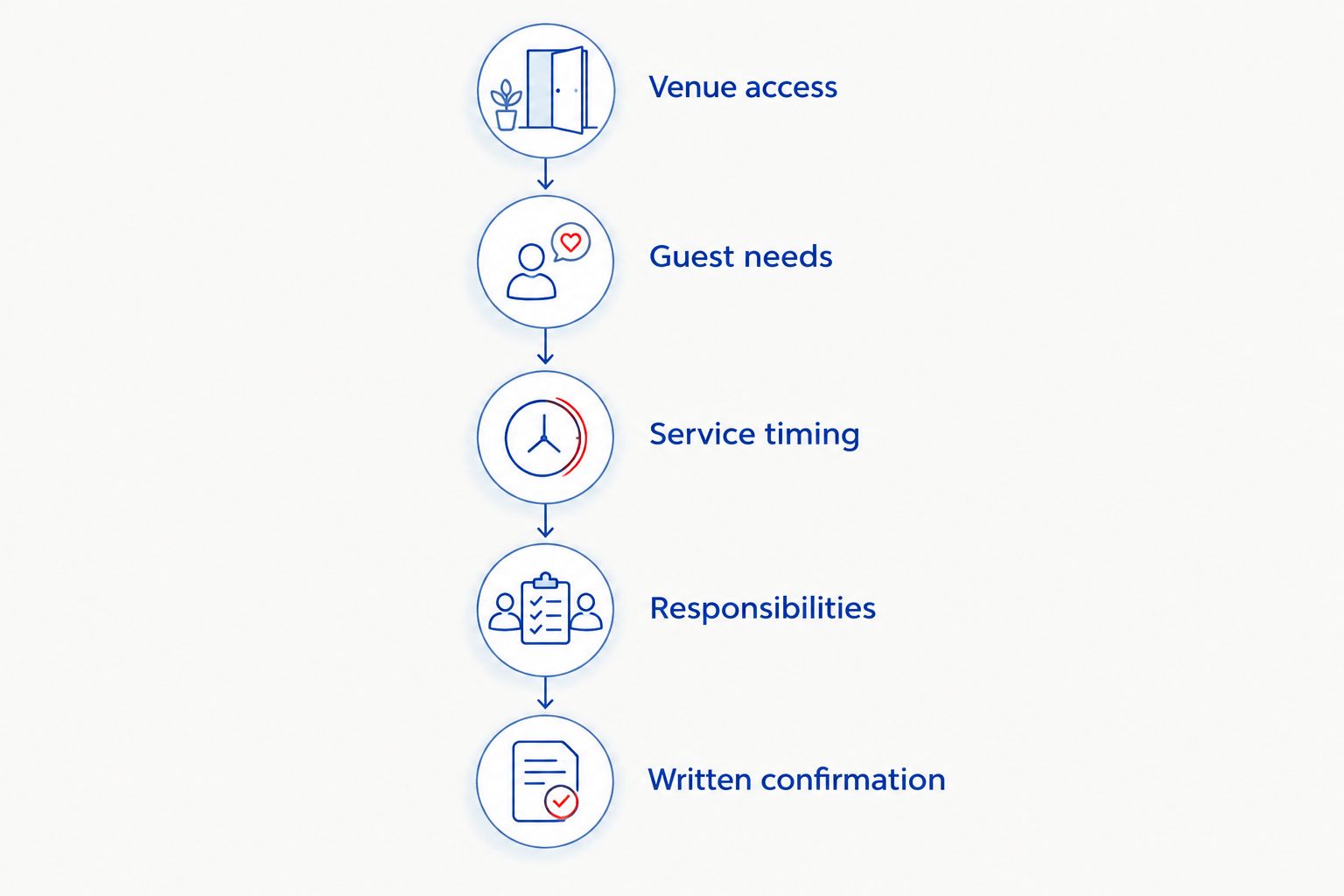
Build the brief in the order your caterer needs to understand the event: where it happens, who is attending, how service fits the programme and who approves the details. Use these steps as a working document, not a substitute for discussion.
- Venue access: Give the full address, room name, entry instructions and venue contact. Identify loading arrangements, stairs, elevators and any access approvals that still need confirmation.
- Guest needs: State the expected attendance and distinguish confirmed guests from outstanding invitations. Record dietary requests separately from general preferences.
- Service timing: Include building access, setup, guest arrival, food service, programme interruptions and clearing. Flag any time that cannot move.
- Responsibilities: Identify the organizer, venue representative and on-site decision-maker. Ask who handles equipment, room preparation, service and removal rather than assuming those tasks are included.
- Written confirmation: Send the updated brief back to everyone responsible for delivering it. Mark unresolved items clearly and assign a person to close each one.
The purpose is not to write a long document. It is to give each person the same instructions, with enough detail to identify a problem before the event.
Start with the event's purpose
Tell your caterer whether the meal supports a presentation, welcomes clients, brings colleagues together or celebrates the end of the year. Those are different occasions, even when they use the same room.
Describe what guests will be doing while food is served. Eating during a working session calls for a different conversation from mingling before speeches; neither should be left for the catering team to infer from an event name.
What should your catering brief contain?
Use 1 shared brief as the reference for the event. Email can carry updates, but the current decisions should live together rather than across separate message threads.
For a 2026 corporate event, a practical brief contains:
- Event details: Company name, occasion, date, venue address and room.
- Attendance: Expected guests, outstanding responses and how you will communicate changes.
- Programme: Arrival, meeting sessions, meal breaks, speeches and departure.
- Guest requirements: Dietary requests, accessibility considerations relevant to service and the contact handling questions.
- Room conditions: Furniture layout, serving space, available facilities and venue restrictions to verify.
- Access instructions: Entry point, loading arrangements, security requirements and the venue contact.
- Service responsibilities: Tasks proposed for the caterer, organizer and venue, with confirmation beside each.
- Decision record: Open questions, named owners and the latest approved revision.
Keep sensitive guest information out of broad circulation. Share the practical details needed for service with the people responsible for handling them.
Make uncertainty visible
Write “awaiting venue confirmation” beside an unresolved access arrangement. Do not let a tentative suggestion become an instruction simply because it appears in the document.
Likewise, distinguish a requested service arrangement from an agreed one. That small distinction keeps the brief honest and gives your next conversation a clear purpose.
Match the logistics to breakfast, lunch or a holiday event
Breakfast, lunch and evening celebrations place different demands on the event schedule. Use the comparison below to choose the planning emphasis, not to assume a particular menu or service is offered.
| Occasion | Best for | Planning advantage | Constraint to resolve |
|---|---|---|---|
| Corporate breakfast | Bringing people together before the main programme | Creates a clear welcome before work begins | Building access and setup must fit the opening arrangements |
| Working lunch | Keeping a meeting centred around a shared break | Gives food service a defined place in the agenda | An overrunning presentation can conflict with service |
| Holiday or Christmas gathering | Making room for conversation and celebration | Allows hospitality to become part of the occasion | Speeches, activities and food service need an agreed sequence |
Choose the schedule around what guests are doing, not just the name of the meal. A breakfast with a formal presentation needs different coordination from a relaxed morning gathering.
For holiday events, identify any room change between the working day and the celebration. Ask who prepares the space and when the catering team can enter it.
Confirm the venue before finalizing service
An office address does not explain how to reach the event room. Walk through the route from the building entrance to the serving area, then record anything that affects access or setup.
Check these details with the venue representative:
- Which entrance the catering team should use.
- Whether loading access needs approval or supervision.
- Whether elevators, doors or corridors have restrictions.
- Which preparation, storage and washing facilities can be used.
- Where service equipment and clearing items can sit.
- What must be removed, restored or handed back after the event.
These are questions to confirm, not facilities to assume. A room described as having a kitchen still needs a conversation about permitted use and suitability for the proposed service.
Look beyond the floor plan
A floor plan shows where furniture sits; it does not explain how people move during service. Identify the paths guests, servers and presenters need to use without blocking one another.
Ask how the arrangement supports guests who need an accessible route. Keep serving areas, exits and presentation equipment in the same conversation rather than planning each separately.
Why corporate catering logistics vary
The right brief depends on the event's actual conditions. These factors explain why a plan that worked for one gathering should not simply be copied to the next:
- Venue access: Security procedures, loading arrangements and room location change how the team reaches the space.
- Programme structure: A fixed presentation creates different service boundaries from an informal reception.
- Guest requirements: Dietary requests and accessibility considerations need their own confirmed arrangements.
- Room use: A space occupied before the event needs an agreed handover before setup.
- Responsibility split: The organizer, venue and caterer must agree who handles each practical task.
A full-service catering enquiry should still include these details. Full-service support does not replace venue confirmation or an accurate guest brief.
Keep recurring events connected, but brief each one separately
A recurring meeting series benefits from a consistent record of venue contacts, room arrangements and previous decisions. Keep that record alongside the event calendar so the next organizer does not have to rebuild the background from memory.
When coordinating your corporate event calendar, separate the recurring schedule from the instructions for each occasion: a calendar entry establishes when an event happens, while the catering brief establishes how service fits it. Reusing a date pattern does not confirm the same attendance, access or room layout.
For your 2026 corporate calendar, give each event its own approval point. That includes recurring lunches, client gatherings and the Christmas celebration, even when the same people help organize them.
Carry forward decisions, not assumptions
Keep confirmed venue instructions where the next organizer can find them, but check that they still apply. Record the source of the instruction so a change can be verified with the right person.
After an event, note practical observations without turning them into universal rules. A serving position that worked for a seated lunch is not automatically right for a standing reception.
How should you handle dietary requirements?
Collect dietary requests before asking the caterer to confirm suitable arrangements. Separate allergies, intolerances and other dietary needs from preferences so the conversation addresses the actual requirement.
Do not promise a guest that a request is accommodated until you have confirmation. Ask how the relevant food will be identified, how it will reach the guest and who should answer questions during service.
Menu descriptions alone do not settle questions about preparation or cross-contact. Those need a direct discussion with the caterer, particularly when a guest has an allergy.
Keep the handover discreet
Choose a named organizer to collect requests and pass on necessary information. Avoid asking guests to explain personal details publicly at the serving point.
The brief should make the arrangement clear without distributing unnecessary personal information. Hospitality feels more considerate when guests know whom to approach and do not have to repeat their request.
Who should make decisions on the event day?
Assign 2 contact roles: an organizer who can approve event changes and a venue contact who can resolve building or room questions. One person can fill both roles only when they genuinely have authority over both areas.
Provide names and the agreed way to reach each contact. A general reception number is not the same as a person authorized to resolve an access issue during setup.
For a 2026 event, make the approval route explicit before the day. If the main organizer will be presenting, identify someone else who can respond while the session is underway.
Agree what happens when the programme changes
Discuss how to communicate a delayed presentation, a room change or an adjusted guest count. Ask the caterer what each change affects before issuing a revised instruction to everyone else.
Keep the tone practical rather than alarming. The goal is to give the team a clear route to a decision, not to predict every possible disruption.
What should you confirm before sending the final brief?
Record 3 timing checkpoints separately: building access, setup completion and guest service. These are different commitments, and a single “arrival time” leaves too much room for interpretation.
Read the brief from the perspective of someone who has never visited the venue. Can that person find the correct entrance, reach the room, identify the decision-maker and understand when guests will eat?
Before circulation, confirm that:
- The caterer and venue have reviewed their respective responsibilities.
- Guest numbers and dietary requests are clearly dated.
- Open questions have owners rather than blank spaces.
- The programme and service schedule describe the same event.
- The current version is easy to distinguish from earlier drafts.
For Fork + Farm corporate catering, bring the occasion, venue details and guest needs into the enquiry together. You can get in touch to begin that conversation without treating an initial idea as a confirmed arrangement.
FAQ
What should I send a corporate caterer for a Calgary event?
Send the date, venue, expected attendance, programme, dietary requests and access details. Identify what is confirmed, what is still being discussed and who can approve decisions.
Does the catering arrival time mean food service starts then?
No, catering arrival and guest service are separate schedule points. Confirm building access, setup completion and food service individually with the caterer and venue.
How do I brief a caterer for a working lunch?
Give the caterer the meeting agenda and identify when guests will eat. Explain whether the presentation continues during lunch and who can communicate a programme change.
What should I confirm for a 2026 corporate Christmas event?
Confirm room access, guest attendance, service timing and how food fits around speeches or activities. Ask who prepares the room if it is used for work earlier that day.
Can I assume every dietary request will be accommodated?
No, dietary arrangements need direct confirmation from the caterer. Explain the requirement and ask about preparation, identification and the handover to the guest.
Who is Fork + Farm corporate catering best suited to?
Fork + Farm suits Calgary and Southern Alberta teams seeking full-service, from-scratch catering for corporate events. Discuss the venue, service needs and event details directly before confirming arrangements.
Can I reuse the same brief for recurring office events?
Use the previous brief as a starting point, not as automatic approval. Reconfirm attendance, dietary requirements, room access and the programme for each event.
One last thing
Send the final brief to the person opening the door, not just the person approving the event. The plan becomes useful when the people handling the first practical handover can act on it.
A welcoming meal starts with a clear welcome for the team preparing it. Make the entrance, contact and service schedule easy to find.
Related guides
- Corporate breakfast catering ideas for Calgary offices
- Lunch catering for Calgary client presentations
- Corporate catering ideas for Calgary office holiday parties


