
November 10, 2026
How to coordinate lunch catering for Calgary training days

Coordinate lunch catering for Calgary training days by agreeing on the meal break with your facilitator, briefing the caterer on your venue and guests, and confirming who handles setup, service and clearing. Keep the lunch plan tied to the training agenda, with a named contact ready to manage changes without interrupting the session.
- For lunch catering Calgary training days, confirm the agenda, venue access and dietary requirements before choosing the menu.
- Fork + Farm provides full-service, from-scratch corporate catering in Calgary and Southern Alberta.
- Choose a lunch arrangement around the room, the break and the conversations you want guests to have.
- Confirm responsibilities in writing so the facilitator can focus on the training.
Why this matters
A training lunch is part of the working day, not a separate event. Guests need a comfortable place to pause, eat and reconnect before the next session begins.
For your 2026 training calendar, settle the practical details before getting attached to a particular serving arrangement. A Calgary corporate caterer logistics brief helps you organize the venue information behind a thoughtful lunch.
Fork + Farm corporate catering is best for Calgary and Southern Alberta organizers seeking full-service, from-scratch event catering. Confirm the menu and service details for your particular training day rather than assuming every arrangement is included.
How do you coordinate lunch catering for Calgary training days?
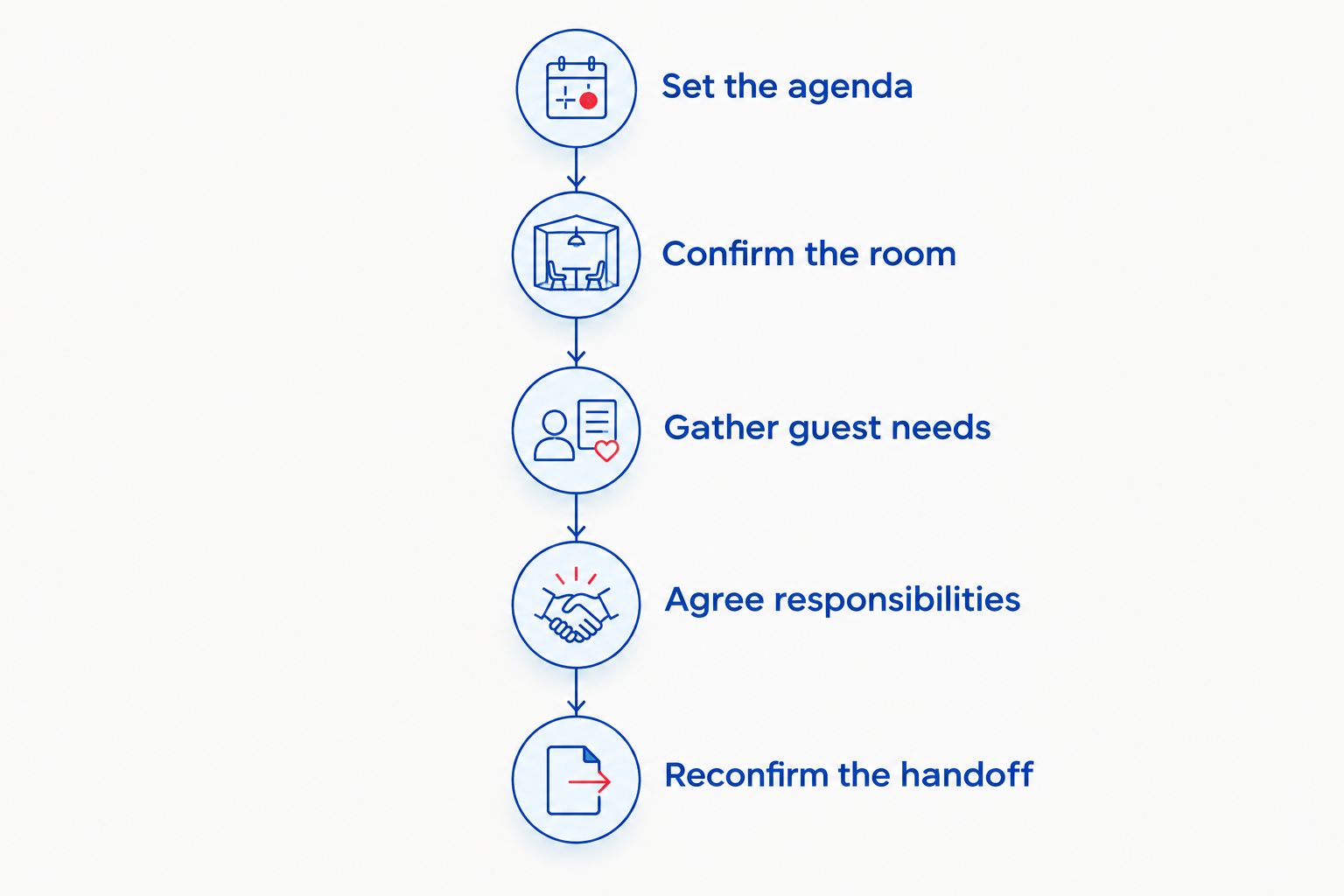
Use these 5 planning steps to connect lunch with the agenda, the building and the people attending. Complete the brief before asking the caterer to shape a proposal.
1. Set the agenda
Give the caterer the planned meal break, the session restart and any activities happening during lunch. Explain whether participants will leave the training room or remain at their tables.
Plan for guests to finish eating before the facilitator needs their attention again. Include setup and clearing in the discussion rather than treating the scheduled lunch break as the entire service window.
2. Confirm the room
Share the venue address, room location and building contact. Ask the venue about loading access, lifts, service areas and any restrictions affecting catering activity.
Describe what happens in the room immediately before lunch. A room occupied by a presenter needs a different setup conversation from an empty dining space next door.
3. Gather guest needs
Provide the expected attendance and explain how you will communicate changes. Collect dietary requirements through a private channel and distinguish allergies from preferences.
Ask the caterer what information is needed to assess each request. Do not promise a guest a particular accommodation before the caterer confirms it.
4. Agree responsibilities
Identify who supplies and places the agreed service items, who directs guests and who clears the space. Ask what is included in the proposed service and what remains with your office or venue team.
A full-service catering brief still needs clear boundaries. Write down the handoffs so nobody discovers an unassigned task while the trainer is waiting to restart.
5. Reconfirm the handoff
Before the event, circulate the agreed plan to the facilitator, venue contact and catering contact. Include the latest attendance, dietary arrangements, access instructions and service sequence.
Name the person authorized to communicate changes on the day. The trainer should not have to stop a session to answer a building-access question.
Which lunch arrangement fits your training room?
Choose the arrangement around the session, not the other way round. Discuss the possibilities with your caterer and venue; these are planning options, not a list of confirmed services for your event.
| Arrangement | Best for | What it supports | What to resolve |
|---|---|---|---|
| Lunch outside the training room | Sessions needing a clear change of pace | A separate place to eat and talk | Room access, guest directions and the return to training |
| Lunch in the training room | Programmes where guests remain together | Continued discussion without moving rooms | Setup noise, working materials and clearing |
| Staggered lunch breaks | Training delivered to separate groups | A meal break fitted around each group’s session | Separate attendance, service timing and room resets |
Lunch outside the training room
A separate lunch space gives guests a physical break from their workstations. It also lets the training room remain ready for the next session.
The trade-off is another transition to manage. Explain where guests should go, how they return and whether the route works for attendees with mobility needs.
Lunch in the training room
Keeping lunch in the training room suits an agenda built around ongoing group discussion. It avoids moving everyone elsewhere, but food service and training materials must share the space.
Ask how tables will be prepared and cleared without disturbing equipment or personal belongings. If lunch includes a presentation, decide whether eating and listening genuinely belong together.
Staggered lunch breaks
Separate breaks can fit training that runs in distinct groups. They also create more handoffs: each group needs the right meal arrangements, a clear service sequence and an agreed place to eat.
Do not treat staggered service as an automatic extension of a single lunch. Ask the caterer to confirm what the proposed schedule involves.
Why training-day catering plans vary
The right plan for your 2026 workshop depends on the event itself. Share these factors early so the proposal reflects the day you are actually hosting:
- Agenda structure: A working lunch and a complete pause from training need different room arrangements.
- Attendance pattern: A single group, rotating cohorts and visitors joining only for lunch require different instructions.
- Venue access: Loading routes, reception procedures and room availability shape setup.
- Dietary requirements: Confirmed guest needs affect menu discussions and meal identification.
- Room use: Presentations, equipment and table materials influence where food service can happen.
- Service responsibilities: The division of setup, hospitality and clearing determines what your team must organize.
Avoid copying the last event’s brief without reviewing it. The same office can host very different training days, and familiar surroundings do not remove the need to confirm details.
What should you include in the catering brief?
Build your brief around 3 information groups: the session, the space and the guests. Keep the document practical enough that someone unfamiliar with the event can understand the plan.
The session
State the training date, purpose and agenda. Include the meal break, the planned restart and whether the facilitator expects conversation, networking or continued instruction during lunch.
For recurring training in 2026, identify which details stay consistent and which change between sessions. A familiar format still needs its own attendance and dietary confirmation.
The space
Describe the room and the route into it, including the venue’s instructions for caterers. Identify any separate service area and ask who approves the proposed setup.
Send access information to the catering contact directly. A note held only by reception does not help the person planning the event beforehand.
The guests
Share expected attendance, dietary requirements and any accessibility considerations relevant to eating and moving through the space. Explain whether guests are employees, external participants or a mixture.
Keep personal information limited to what is needed for service. The practical goal is to help the right meal reach the right guest with care and discretion.
Make dietary arrangements clear before choosing dishes
Collect requirements before settling the menu. Ask guests to describe what they need, then pass the relevant information to the caterer for confirmation rather than interpreting it yourself.
The discipline behind planning for dietary restrictions is to carry each requirement from the guest response through menu confirmation and the service handoff. Collecting a form is only the beginning; someone still needs to confirm how the arrangement will work at lunch.
Ask how agreed meals will be identified and how guests should raise questions. Do not assume that a dish name, a dietary label or separate placement answers questions about ingredients and handling.
For allergy-related requests, give the caterer the guest’s stated requirement and ask what can be accommodated. Relay the confirmed response accurately, without turning it into a broader safety guarantee.
If a requirement changes, update the person responsible for the catering plan. Avoid leaving revised instructions in a separate email thread that the service contact never receives.
Keep the facilitator out of service decisions
Assign 2 named contacts: a catering decision-maker from your organization and a venue or building contact. One person can hold both roles when appropriate, but the responsibilities must remain clear.
The catering decision-maker handles attendance changes, guest questions and agreed service adjustments. The building contact handles access and venue instructions, so practical questions do not interrupt the trainer.
For your 2026 sessions, give both contacts the same final brief. Confirm who has authority to approve a change and who should simply pass information along.
Have a short conversation with the facilitator as well. Agree how guests will be released for lunch, how the restart will be announced and what happens if the morning session runs late.
A delayed session needs a conversation with the caterer, not an assumed change to service. Check what is possible before telling participants that lunch has moved.
Connect lunch with the rest of the corporate day
If your training programme includes breakfast or another gathering, brief each occasion separately within the same event plan. Explain which guests attend each part and when rooms need to be reset.
The same approach applies when training leads into a corporate holiday or Christmas gathering. Make the transition explicit: who stays, whether additional guests arrive and how the atmosphere changes from learning to celebration.
A welcoming lunch does not need to carry the whole occasion. Give the training session its own practical rhythm, then discuss the hospitality you want for the gathering afterwards.
When enquiring about Fork + Farm corporate catering, describe the complete day rather than lunch alone. Its stated offering is full-service, from-scratch catering; the enquiry is where you confirm the specific menu and service arrangements for your event.
What should you confirm before the day?
Review the final brief against 4 checkpoints: attendance, access, service and communication. Read it as though you are arriving at the venue for the first time.
- Attendance: Does the plan reflect the latest guest information and confirmed dietary arrangements?
- Access: Does the catering contact have the correct arrival instructions and building contact?
- Service: Are setup, meal service and clearing responsibilities written down?
- Communication: Does everyone know who handles changes and how to reach that person?
For a 2026 training programme, keep a reusable brief, but date each event’s version clearly. That helps your team distinguish an agreed plan from an older draft.
Bring those details to an enquiry with the catering team. Share the occasion and the experience you want guests to have, alongside the practical information needed to discuss it.
FAQ
How do I organize lunch catering for a Calgary training day?
Start with the training agenda, venue access and guest requirements, then agree the menu and service responsibilities with the caterer. Share a final brief with the facilitator and the people handling the event.
Should guests eat in the training room or somewhere else?
Choose the lunch location around the session and the available space. A separate room creates a change of setting, while eating in the training room requires a clear plan for materials, setup and clearing.
What information does a caterer need for a training lunch?
Provide the date, venue, expected attendance, meal break, dietary requirements and access instructions. Explain how the room will be used before and after lunch and ask what further details the caterer needs.
How should I handle dietary restrictions for a corporate lunch?
Collect guests’ stated requirements privately and ask the caterer to confirm what can be accommodated. Agree how meals will be identified and communicate any changes directly to the catering contact.
What if the training session runs late?
Contact the caterer before changing the lunch plan. Confirm what adjustments are possible, then give the facilitator and guests the agreed instructions.
Can I discuss breakfast and a Christmas gathering alongside training lunch?
Include every occasion in the event brief, but give each its own attendance, timing and service discussion. Confirm the arrangements for breakfast, lunch and the corporate Christmas gathering rather than assuming they are interchangeable.
Does Fork + Farm cater corporate events in Calgary?
Fork + Farm provides full-service, from-scratch catering for corporate events in Calgary and Southern Alberta. Enquire about the menu, service arrangements and date for your particular training day.
One last thing
Ask the facilitator what participants should feel when lunch ends: ready for quiet concentration, comfortable talking with new colleagues or prepared for group work. That answer gives your catering conversation a human purpose beyond feeding the room.
Plan the return to training as carefully as the meal itself. A clear closing cue, an agreed clearing plan and a welcoming room help everyone understand what comes next.
Related guides
- Corporate lunch catering ideas for busy Calgary teams
- Corporate breakfast catering ideas for Calgary offices
- Corporate catering ideas for Calgary office holiday parties


