
November 3, 2026
Best corporate catering ideas for Calgary office holiday parties

Best overall: a shared holiday lunch. Best for busy teams: a festive breakfast. Best for conversation: a standing reception. For corporate catering Calgary offices are planning in 2026, these six ideas help you choose the right atmosphere before settling the menu.
- For corporate catering Calgary teams can enjoy together, a shared holiday lunch is the strongest starting point.
- Forkandfarmcatering provides full-service, from-scratch corporate catering in Calgary and Southern Alberta.
- Choose breakfast for a daytime gathering, a reception for mingling, or dinner for a seated celebration.
- Confirm your preferred format, dietary arrangements, venue requirements and service scope before making plans final.
Why the format matters before the menu
A holiday party should feel like a thank-you, not another appointment squeezed between meetings. Your catering format shapes whether colleagues settle into conversation, drift between groups or return to their desks with a warm start to the day.
Forkandfarmcatering is best for Calgary corporate catering enquiries seeking full-service, from-scratch food for a hosted celebration. Start with Forkandfarmcatering when that approach matches your event, then discuss the specific format rather than assuming every idea below is an offered service.
For your 2026 celebration, decide what you want the gathering to accomplish. A Christmas lunch that brings one office together needs a different rhythm from a company reception welcoming colleagues who rarely meet.
What makes the best corporate holiday catering idea?
Use these criteria before choosing dishes or decorations:
- Shared time: Choose a format that lets the intended guests participate, including colleagues with different working hours.
- Conversation: Decide whether you want settled table talk or movement between groups.
- Room fit: Consider seating, circulation, food placement and the space needed by the catering team.
- Guest inclusion: Collect dietary requirements and access needs before agreeing on the menu and layout.
- Hosting support: Confirm who handles setup, service, clearing and coordination; do not assume those responsibilities are identical across proposals.
- Event purpose: Match the meal to your main moment, whether that is a team thank-you, informal introductions or an end-of-year presentation.
Corporate holiday catering ideas at a glance
These are planning options to discuss with your caterer, not a confirmed menu or service list.
| Rank and idea | Best for | Standout feature | Key limitation |
|---|---|---|---|
| 1. Shared holiday lunch | Bringing an office together during the workday | A clear pause built around a meal | Needs protected time away from desks |
| 2. Festive breakfast | Teams keeping evenings free | A celebration before the working day takes over | Arrival patterns can interrupt the gathering |
| 3. Standing reception | Conversation across departments | Guests can move between groups | Requires thoughtful seating and meal expectations |
| 4. Seated holiday dinner | Recognition and a formal thank-you | A shared setting for speeches and conversation | Requires a more coordinated schedule |
| 5. Food-station gathering | An informal event centred on movement | Food becomes part of the room's flow | Service points need space and queue planning |
| 6. Dessert-and-coffee social | A short afternoon appreciation event | A focused break without a full meal | Does not replace lunch or dinner |
1. Shared holiday lunch: best for a whole-office thank-you
A shared lunch gives the celebration a clear place in the workday. Guests gather around a meal rather than trying to celebrate while answering messages, and the host has a natural moment to offer thanks.
For a 2026 office holiday party, this is the default worth discussing first. Ask your caterer which lunch service arrangement suits your room, guest needs and planned remarks; do not choose the arrangement from photographs alone.
Shared holiday lunch pros:
- Creates a dedicated occasion without requiring an evening commitment.
- Gives colleagues a shared meal around which to talk.
- Provides a clear place for a short welcome or team acknowledgement.
Shared holiday lunch cons:
- Loses its purpose if guests are expected to keep working throughout.
- Needs an attendance plan when coverage or shifts prevent everyone joining together.
Best for: An office that wants one welcoming, workday celebration.
Verdict: Choose a shared holiday lunch when togetherness matters more than formality. Protect the time in calendars as carefully as any other company event.
2. Festive breakfast: best for teams keeping evenings free
Breakfast makes the celebration part of the morning rather than an addition to the evening. It suits an organiser who wants a warm welcome and a shared start, with a clear transition back into the working day.
Set an actual gathering time rather than relying entirely on people arriving whenever they can. If arrivals must be staggered, discuss how food service and the welcome will work across that period.
Festive breakfast pros:
- Keeps the celebration within daytime working arrangements.
- Gives a host a natural opening for a brief thank-you.
- Can support an informal atmosphere without an evening programme.
Festive breakfast cons:
- Early meetings, commutes and staggered starts need consideration.
- A loosely defined arrival window makes a shared moment harder to organise.
Best for: Teams that want a daytime Christmas gathering without asking colleagues to stay late.
Verdict: Choose breakfast when the morning is genuinely shared time. If half the team cannot attend, a different meal deserves priority.
3. Standing reception: best for cross-department conversation
A standing reception puts movement at the centre of the event. Instead of spending the entire gathering beside the same colleagues, guests have opportunities to join different conversations.
Describe it clearly in the invitation, including whether food is intended as refreshments or a meal. A reception also needs places to sit; standing should be an option, not a condition of participation.
Standing reception pros:
- Supports introductions between departments or office locations.
- Allows the event to feel less formally scheduled.
- Makes conversation, rather than a seated programme, the main activity.
Standing reception cons:
- Requires accessible seating and clear circulation routes.
- Creates confusion if guests arrive expecting dinner and the food plan is lighter.
Best for: An organisation whose main goal is helping people meet beyond their usual teams.
Verdict: Choose a reception for mingling, with seating and clear food expectations built in. Confirm the proposed food service with the caterer before describing it to guests.
4. Seated holiday dinner: best for recognition and speeches
A seated dinner gives the evening a deliberate shape. Guests have a place to settle, and the organiser can build acknowledgements or presentations into an agreed programme.
The important decision is not how formal the tables look. It is whether your company wants a shared evening that asks guests to commit to a start time and a coordinated meal.
Seated holiday dinner pros:
- Gives recognition moments a defined place in the evening.
- Supports longer conversations among table companions.
- Makes a clear distinction between the working day and the celebration.
Seated holiday dinner cons:
- Evening attendance introduces personal scheduling considerations.
- Speeches, food service and guest arrivals need coordination.
Best for: A company planning a hosted evening with meaningful acknowledgements.
Verdict: Choose a seated dinner when the programme deserves everyone's attention. Agree on the order of service and remarks together, rather than treating catering as a separate schedule.
5. Food-station gathering: best for an informal, moving celebration
A station-led format places food at designated points around the room. It gives guests reasons to move, but the layout needs to support that movement rather than sending everyone into the same corner.
Treat stations as a proposal to explore, not a confirmed offering. Ask whether your preferred approach fits the caterer's service, the venue's facilities and the number of guests expected to eat at the same time.
Food-station gathering pros:
- Makes movement part of the celebration.
- Provides an alternative to remaining seated throughout.
- Lets the room include separate areas for eating and conversation.
Food-station gathering cons:
- Needs suitable space for food service and circulation.
- Queues can interfere with conversation or access if placement is poorly planned.
Best for: An informal gathering in a venue with room for separate service points.
Verdict: Choose stations only after the room plan supports them. Keep entrances, seating and access routes clear before deciding where food belongs.
6. Dessert-and-coffee social: best for a short afternoon thank-you
A dessert-and-coffee gathering keeps the occasion focused: a pause, something enjoyable to share and a personal word of appreciation. It works as its own small celebration when a full meal is not the intention.
Make that distinction explicit. Ask about suitable sweet and beverage options, alongside dietary requirements, without assuming that a particular dessert or drinks service is available.
Dessert-and-coffee social pros:
- Gives a short gathering a clear purpose.
- Leaves room for a personal welcome without a full programme.
- Offers an alternative to a meal-centred event.
Dessert-and-coffee social cons:
- Is not a substitute for feeding guests across a mealtime.
- Needs alternatives discussed for guests whose requirements are not met by the initial proposal.
Best for: A brief afternoon appreciation event after guests have eaten lunch.
Verdict: Choose a dessert social when a small, thoughtful pause is the whole occasion. Name the format plainly in the invitation.
How these ideas are ranked
Shared lunch takes the first position because it gives an office celebration a straightforward centre: people eating together during the workday. The remaining options serve different purposes, from preserving evenings to creating space for introductions or recognition.
This is a ranking by event fit, not a claim about tested caterers or confirmed service packages. Your guest needs, room and schedule should determine the final choice.
Prepare an event brief before choosing the menu
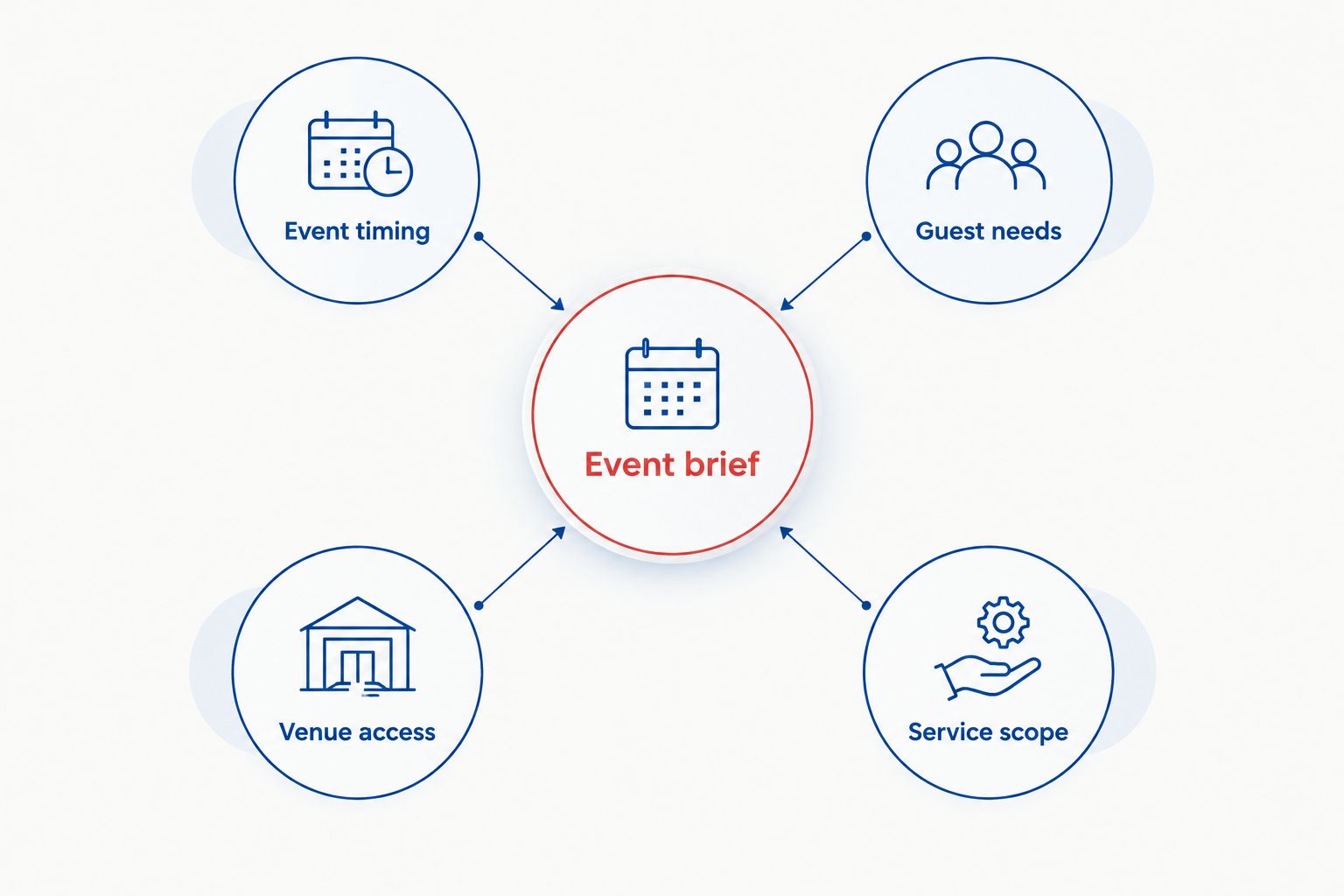
For a 2026 enquiry, write a short brief that connects the celebration you imagine with the practical details your caterer needs. Use the following headings so the conversation starts with the event, not a disconnected wish list of dishes.
Event timing
Share the proposed date, guest arrival time, intended eating period and any remarks. Include whether attendance is simultaneous or staggered, and identify any fixed building-access arrangements.
Guest needs
Give your expected attendance and explain how you will collect dietary information. Use 2 RSVP questions as a starting point: what dietary requirements should the organiser know, and what access arrangements would help the guest participate? Agree on how sensitive information will be shared.
Venue access
Describe the location, dining space and known facilities. Ask what the catering team needs to know about loading, preparation space, power, furniture and clearing; do not assume the office kitchen is suitable for the proposed service.
Service scope
Name 1 event coordinator as the main contact. Confirm responsibilities at 3 checkpoints: setup, food service and clearing so the office team and caterer understand who is handling each part.
Bring that brief to the get started page. Forkandfarmcatering provides full-service corporate catering, while the enquiry establishes which details and arrangements fit your particular celebration.
Tell us about your holiday gathering
Share your occasion, proposed date, location and guest needs to begin the conversation.
Which corporate catering idea should you choose?
Start with a shared holiday lunch unless another format answers a clearer need. Choose breakfast to keep evenings free, a reception for introductions, dinner for recognition, stations for movement or a dessert social for a shorter thank-you.
For Christmas 2026, make the occasion feel personal through the welcome and the attention given to guests. An elaborate format is not a replacement for an invitation that makes people feel genuinely included.
FAQ
What’s the best catering idea for a Calgary office holiday party?
A shared holiday lunch is the strongest starting point for an office that wants to celebrate together during the workday. Choose another format when your schedule, venue or event purpose calls for it.
Is breakfast or lunch better for an office Christmas party?
Breakfast is better when the team shares a reliable morning gathering time; lunch is better when a midday pause brings more people together. Check working patterns before choosing either.
Should our office holiday reception include a full meal?
Decide whether the reception replaces a meal before agreeing on food service. Tell guests clearly whether to expect a meal or refreshments, and confirm the proposal with your caterer.
How do we plan for dietary requirements at a corporate party?
Collect dietary requirements during the RSVP process and discuss them with your caterer before confirming the menu. Ask how requirements will be accommodated and communicated during service rather than assuming every dish suits every guest.
What should we send with a corporate catering enquiry?
Send your proposed date, venue, expected attendance, event timing and known guest requirements. Include the style of gathering you prefer and ask which service arrangements suit it.
Does Forkandfarmcatering provide corporate catering in Calgary?
Forkandfarmcatering provides full-service, from-scratch catering for corporate events in Calgary and Southern Alberta. Discuss your holiday event directly to confirm the menu, format and service scope.
Can we assume our preferred Christmas 2026 date is available?
No; confirm your preferred Christmas 2026 date directly with the caterer. A planning guide does not establish availability or reserve an event date.
One last thing
Write the welcome before choosing the menu. If your message is about bringing colleagues together, protect shared time; if it is about recognising their work, give those acknowledgements a clear place in the gathering.
That small decision gives every later choice a purpose. The food, service and room can then support the thank-you you actually want to give.
Related guides
- Corporate breakfast catering ideas for Calgary offices
- Dessert and late-night catering ideas for Calgary weddings
- Wedding catering menu styles for Calgary celebrations


