
November 17, 2026
Corporate catering for Calgary government teams: complete 2026 guide

Government office catering is meal and hospitality planning for public-sector teams, with the aim of supporting productive meetings and welcoming gatherings. For Calgary offices planning in 2026, start with your organization’s approval process, building access and guest needs—not a menu chosen before those details are settled.
- For corporate catering for government offices Calgary teams should confirm approvals, building access and dietary needs before choosing menus.
- Fork + Farm is best for Calgary teams seeking full-service, from-scratch corporate catering.
- Choose breakfast catering, meeting lunches or holiday hospitality around the agenda and room layout.
- Keep internal approvals separate from the caterer’s confirmation; neither replaces the other.
Why corporate catering matters for government teams
A working breakfast, staff training lunch and public-facing reception need different kinds of hospitality. Your catering brief should explain who is attending, what the gathering is meant to achieve and how meal service fits around the work.
Government office organizers should also check the purchasing, visitor-access and information-handling requirements that apply to their own organization. Do not assume that municipal, provincial and federal workplaces share the same process.
Fork + Farm is best for Calgary teams seeking full-service, from-scratch corporate catering. Its stated service covers corporate events in Calgary and Southern Alberta; confirm the specific menu, staffing and site arrangements for your gathering through an enquiry.
For an early planning conversation, get started with the event purpose, location and proposed schedule. An enquiry begins the discussion; it does not establish approval or confirm a date.
How to plan government office catering in 2026
1. Define the gathering before choosing food
Begin with a shared document rather than separate email requests from every department. Create 1 event brief that identifies the host, purpose, proposed date, location and expected attendance, then keep that document current as decisions change.
Distinguish between a meal that supports work and hospitality that is part of the occasion. A training lunch needs a clear return-to-session plan; a staff appreciation gathering needs room for conversation. If colleagues must continue serving the public, include their meal access in the plan rather than treating them as late arrivals.
For a 2026 planning file, record what is confirmed and what remains provisional. That distinction helps you avoid presenting an estimated headcount or tentative room booking as a settled instruction.
- Name the department or team hosting the event.
- Describe the gathering’s purpose in a short sentence.
- Separate staff, presenters and invited guests in the attendance estimate.
- Identify colleagues who cannot leave their workstations together.
- Mark the date, room and headcount as confirmed or provisional.
2. Confirm the approval route inside your organization
Check your internal purchasing guidance before asking a caterer to proceed. Ask the responsible colleague which authorizations, supplier documentation and ordering steps apply to this event; requirements belong to your organization, not to a general catering checklist.
Keep approval and coordination responsibilities visible. Name 2 operational contacts in your brief: an internal event lead and a day-of building contact. These roles can be held by the same person, but the responsibilities should remain explicit.
Fork + Farm corporate catering enquiries should include any documentation questions your purchasing team needs answered. Do not describe the caterer as an approved government supplier unless your organization has verified that status.
- Identify who authorizes the catering arrangement.
- Ask which supplier documents your organization requires.
- Confirm who can accept changes to the event instructions.
- Record the correct administrative and invoicing details.
- Keep internal authorization separate from the caterer’s written confirmation.
3. Match the service approach to the agenda
Start with a simple agenda-and-room sketch. Mark when guests arrive, when food should be ready and when the room must return to meeting use; then identify where people can collect or receive their meal without blocking doors.
Choose service around the meeting, not the meeting around service. A shared meal break gives colleagues time together, while staggered attendance calls for a different conversation about meal handling and replenishment. Neither arrangement suits every workplace.
Once you have the sketch, ask Fork + Farm how its full-service catering could support the event. Discuss the approaches below as planning options, not as a confirmed list of available packages or service inclusions.
- State whether guests will eat together or at different times.
- Identify whether food stays inside or outside the meeting room.
- Explain any presentation, recording or quiet-session requirements.
- Ask what setup, service and clearing responsibilities are included.
- Confirm the agreed service approach in writing.
4. Gather dietary needs with care
Use an approved internal form or direct response process to collect the information needed for meal planning. Ask about dietary requirements rather than requesting medical histories, and follow your organization’s rules for handling personal information.
A dietary label does not answer every preparation question. Discuss ingredients, cross-contact concerns and how the correct meal reaches the correct guest directly with the caterer. Do not promise an allergen-free meal or preparation environment on a supplier’s behalf.
For your 2026 event, make dietary confirmation a distinct task rather than a note buried in the attendance list. Ask the caterer what information and notice are needed, then communicate those requirements to attendees without adding your own assurances.
- Collect relevant dietary requirements through an appropriate channel.
- Share only the information needed to arrange meals.
- Distinguish preferences from allergies as guests describe them.
- Confirm ingredient and cross-contact questions with the caterer.
- Agree how dietary meals will be identified and handed over.
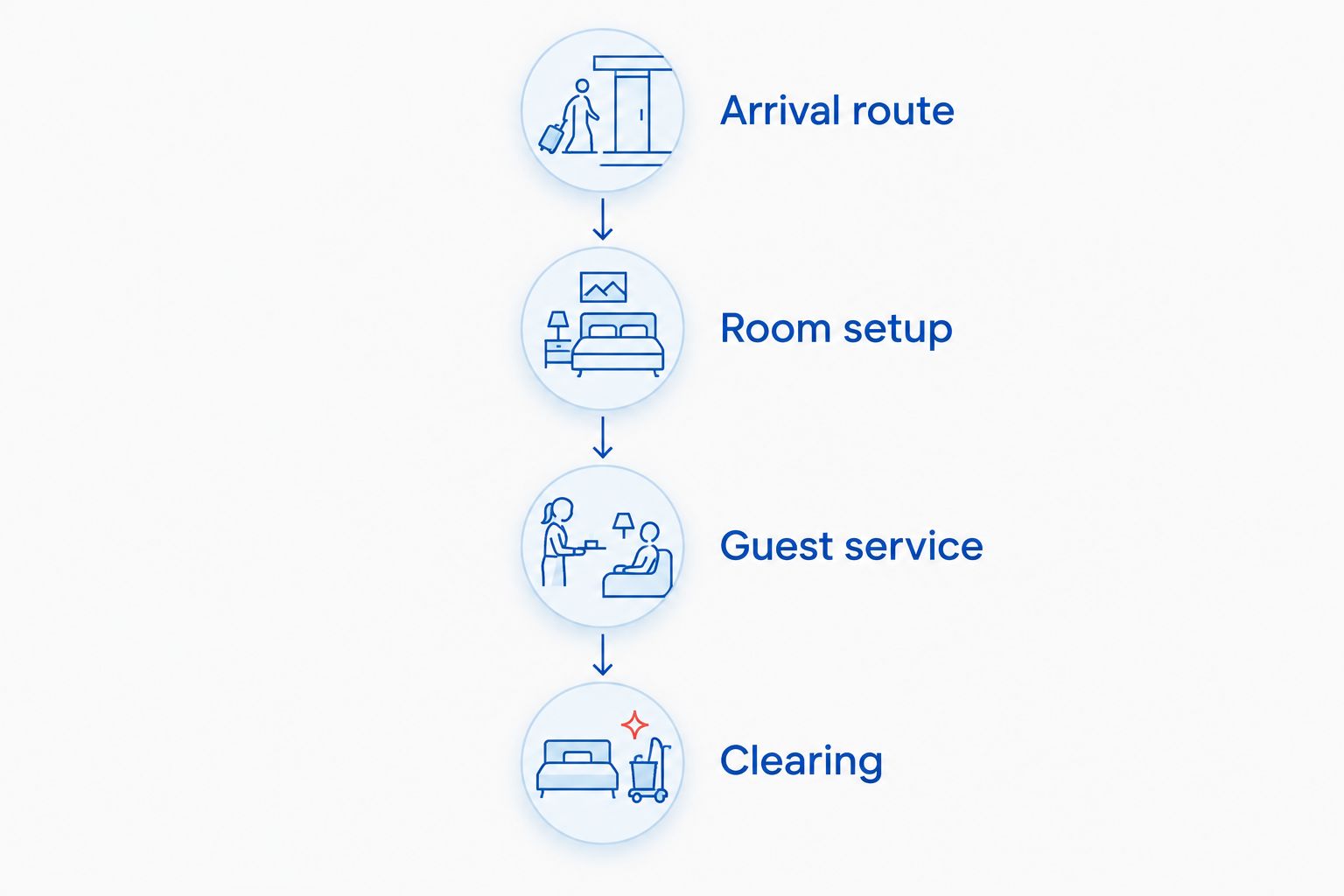
5. Map the building journey from arrival to clearing
Walk the route yourself before sending access instructions. Check the actual entrance, reception procedure, lift route and event room rather than relying on a building address alone; the useful instruction is where the catering team should arrive and who will meet them.
Ask your building representative about restrictions that apply to deliveries, equipment, preparation areas and waste removal. These are site-specific questions. A caterer cannot confirm access arrangements that your workplace has not authorized.
Use 3 planning checkpoints: before the enquiry, before confirming the arrangement and before event day. At each checkpoint, revisit the same access notes so a room change or revised meeting time does not leave the catering instructions behind.
- Arrival route: confirm the permitted entrance and unloading arrangements.
- Room setup: identify tables, service space and clear walkways.
- Guest service: keep meal collection away from public-facing queues.
- Clearing: agree who removes equipment, leftover food and waste.
- Name a contact who can resolve access problems on the day.
6. Shape breakfast, lunch and holiday hospitality differently
Write the meal occasion into the brief. For breakfast, explain whether people will eat before the meeting or during opening remarks; for lunch, identify the actual break and whether attendees need to return to the same seats immediately afterward.
For a 2026 corporate holiday or Christmas gathering, clarify whether the occasion is staff appreciation, a departmental reception or a working meeting with a seasonal meal. Use the event name approved by your organization, and make room for colleagues whose dietary or cultural preferences differ.
Menu ideas belong in the conversation, but specific dishes and service formats need confirmation. Ask what suits your gathering instead of assuming that a breakfast arrangement, shared lunch or reception service is part of a standard offering.
- Explain whether breakfast happens before or during the meeting.
- Protect the lunch break from competing agenda items.
- Identify whether a reception includes seated or standing guests.
- Discuss seasonal preferences without assuming a fixed holiday menu.
- Include staff working different schedules in the hospitality plan.
7. Close the loop with a written handover
Bring the agreed instructions together before the event. A short, current handover is more useful than a long email chain containing superseded room names, attendance estimates and menu requests.
Ask the caterer to confirm the arrangements it has accepted, and obtain your own organization’s outstanding approvals separately. For Fork + Farm corporate catering, use the enquiry conversation to establish the event-specific scope rather than assuming that full-service means every possible task is included.
On event day, give the internal lead a clear decision path for changes. Afterward, record practical lessons about access, timing and guest needs so the next organizer starts with useful information rather than guesswork.
- Reconcile the final instructions with the latest agreed attendance.
- Confirm the menu and dietary arrangements accepted by the caterer.
- Record arrival, service and clearing arrangements together.
- Share operational contacts with the people who need them.
- Note any changes that still require approval or confirmation.
Compare service approaches for your office
These are planning approaches to discuss, not confirmed Fork + Farm packages. Each offers a different balance of guest interaction, room use and organizer involvement; ask which approach the caterer can provide for your event.
| Planning option | Best for | Main advantage | Key limitation to resolve |
|---|---|---|---|
| Individually allocated meals | Named attendees with a defined meal break | Makes meal allocation explicit | Requires an accurate allocation list and a clear handover process |
| Shared buffet | Teams taking a meal break together | Lets guests make selections at the service point | Requires space for collection and a plan for dietary questions |
| Seated service | Formal meetings or hosted gatherings | Keeps guests at their tables | Requires coordinated seating, service access and agenda timing |
| Reception-style service | Staff appreciation or holiday gatherings centred on conversation | Supports movement and informal conversation | Requires attention to accessible eating spaces and meal expectations |
| Full-service event catering | Organizers seeking a coordinated hospitality arrangement | Brings service responsibilities into the catering discussion | The exact staffing, equipment and clearing scope still needs agreement |
The best approach is the one your room, agenda and guest needs can support. Do not select a format solely because it worked for another department in a different building.
Common mistakes government office organizers make
Treating supplier suitability as internal approval
A caterer’s service description does not establish your organization’s authorization to engage it. Check the required internal route before giving instructions that imply a confirmed arrangement.
Sending the street address without access instructions
A correct address still leaves reception, unloading and room access unresolved. Give the catering team an approved arrival route and a reachable building contact, especially where public and staff entrances differ.
Planning only for colleagues who can attend together
A single shared lunch break does not account for staff who must maintain service coverage. Ask team leads how attendance will work, then discuss a suitable meal arrangement with the caterer.
Calling a dietary request confirmed before it is checked
Recording a guest’s request is not the same as confirming that the caterer can meet it. Close that communication loop directly and avoid assurances about ingredients or preparation that have not been provided.
Treating the holiday gathering as an ordinary meeting lunch
A Christmas reception or year-end appreciation event needs its own attendance, room and hospitality brief. Clarify the occasion, approved event name and intended guest experience rather than copying an unrelated lunch order.
FAQ
What’s the best catering approach for a Calgary government office meeting?
The best approach fits your meeting agenda, room layout and guest needs. Confirm whether attendees eat together, whether service would interrupt presentations and what your building permits before choosing a format.
Does Fork + Farm cater corporate events in Calgary?
Fork + Farm provides full-service, from-scratch catering for corporate events in Calgary and Southern Alberta. Enquire about your specific gathering to confirm the menu, service scope and event arrangements.
Can a government office book a caterer directly?
Follow your organization’s purchasing and authorization process before confirming catering. Ask the responsible internal colleague which approvals and supplier documentation apply to your event.
What should I send in a government office catering enquiry?
Send the event purpose, proposed date, location, expected attendance, agenda and known dietary requirements. Include building-access questions and identify which details remain provisional.
Is buffet catering better than individually allocated meals for office training?
Neither format is better for every training session. A buffet needs collection space and a shared service plan, while individually allocated meals need accurate allocation and handover arrangements.
How should we handle food allergies at an office event?
Discuss each relevant allergy requirement directly with the caterer and confirm what can be accommodated. Follow your organization’s information-handling rules and do not make independent promises about ingredients or cross-contact.
Can we enquire about a 2026 government office Christmas event?
You can enquire about a 2026 Christmas or corporate holiday gathering, but an enquiry does not confirm a date. Share the occasion, proposed schedule, attendance and venue details so the arrangements can be discussed.
One last thing
Put the room’s return-to-use time in the brief—not just the meal’s start time. If another team needs the space afterward, clearing is part of the event schedule, not an afterthought. Confirm who restores the room and what the handover should look like.
When you are ready, get in touch with your working brief and the questions still to be settled. A thoughtful conversation leaves room for welcoming hospitality and clear responsibilities.
Related guides
- Brief a Calgary corporate caterer on event logistics
- Corporate breakfast catering ideas for Calgary offices
- Corporate catering for Calgary Christmas receptions


