
November 6, 2026
Best Calgary catering options ranked by service style

Best overall for a seated celebration: plated service. Best for shared-table warmth: family-style. Best for guest choice: a buffet. This guide compares 5 service styles for weddings, corporate gatherings and private parties, with Fork + Farm offering full-service, from-scratch catering in Calgary and Southern Alberta.
- For full service catering Calgary, choose plated service when a seated meal anchors the celebration.
- Family-style catering suits shared-table weddings; buffets suit gatherings where guests choose their own plates.
- Chef stations suit interactive receptions; cocktail-style catering suits events centred on conversation rather than a seated dinner.
- Fork + Farm suits hosts seeking full-service, from-scratch catering for Calgary weddings, corporate events and private parties.
Why service style matters
Your menu tells guests what they will eat. Your service style shapes how they spend the evening: seated together, passing dishes, visiting a buffet or finding conversation between bites.
For a 2026 Calgary event, choose the meal's place in the occasion before choosing individual dishes. A wedding reception built around heartfelt speeches needs a different rhythm from a corporate Christmas gathering designed for colleagues to reconnect.
These are service-style recommendations, not a list of confirmed packages. Discuss each format with your caterer and venue before treating it as part of your event plan.
What makes the best full-service catering in Calgary?
The strongest choice fits your guests, your space and the way you want to host. Use these criteria before comparing the styles below:
- Event purpose: Decide whether the meal is the main occasion or supports conversation, presentations or dancing.
- Guest experience: Consider movement, seating, accessibility and how guests will communicate dietary requirements.
- Venue fit: Check dining space, service routes, preparation areas and room for queues or stations.
- Timing: Give the meal a clear place beside arrivals, speeches, presentations and other activities.
- Service scope: Confirm who handles setup, food service, clearing and any rentals or beverage arrangements.
Fork + Farm is a fit for hosts seeking full-service, from-scratch catering for Calgary weddings, corporate events and private parties. Confirm the proposed menu, service format and responsibilities directly; “full service” should become a written scope, not an assumption.
Calgary catering styles at a glance
The ranking starts with a seated celebration as the default. A different event purpose changes the best choice immediately.
| Rank and style | Best for | Standout feature | Key limitation |
|---|---|---|---|
| 1. Plated service | A reception centred on a seated meal | Guests remain seated while courses arrive | Needs coordination with seating and the event schedule |
| 2. Family-style | A wedding centred on shared-table hospitality | Guests pass serving dishes around the table | Platters compete with décor and place settings for space |
| 3. Buffet | A gathering centred on individual food choices | Guests select food from a shared service area | Queues and guest movement need deliberate planning |
| 4. Chef stations | A reception built around food interaction | Separate food destinations become part of the experience | Station placement and service flow need room |
| 5. Cocktail-style | An event centred on conversation and movement | Food fits around a less seated format | Requires clarity about whether a full meal is provided |
1. Plated service: best for a seated Calgary celebration
Plated service brings individual dishes to seated guests. Choose it when you want dinner to feel like a shared chapter of the celebration, with attention returning naturally to the people around each table.
For a wedding, this gives speeches and other formal moments a clear place around the meal. For a corporate dinner, it supports a seated programme without sending guests to a food service area during each course.
Plated service pros:
- Keeps guests seated during the meal.
- Gives courses a defined place in the event schedule.
- Leaves dining tables free of shared serving platters.
Plated service cons:
- Requires coordination between service and speeches or presentations.
- Needs a clear method for identifying dietary meals and their recipients.
- Offers less spontaneous movement than a reception-style format.
Best for: Couples or corporate hosts who want a seated meal to anchor the occasion.
For a 2027 wedding, describe the atmosphere you want before settling the menu: an unhurried dinner, a more formal reception or a celebration that moves quickly towards dancing. Then ask how the proposed service plan supports that feeling.
Verdict: Choose plated service when sitting down together is the heart of the event.
2. Family-style: best for shared-table wedding hospitality
Family-style service places shared dishes on dining tables for guests to pass and serve. It brings the gestures of a gathering at home into a larger celebration: offering a dish, making room and sharing something together.
The practical detail is table space. Serving dishes need somewhere to land without crowding flowers, glassware, place settings or guests' personal belongings.
Family-style pros:
- Makes sharing part of the dining experience.
- Keeps guests at their tables while they serve themselves.
- Lets guests choose portions from the dishes presented.
Family-style cons:
- Requires table layouts that accommodate serving dishes.
- Needs serving utensils and a clear replenishment plan.
- Requires careful discussion of shared food and dietary requirements.
Best for: Couples who want their reception meal to feel welcoming, communal and close-knit.
For a 2028 wedding, bring your table design into the catering conversation early. A photograph of the intended place settings is more useful than describing the room as simply relaxed or romantic; it shows what the service must work around.
Verdict: Choose family-style when passing food and sharing the table are part of your vision.
3. Buffet: best for guests choosing their own plates
A buffet presents food in a shared service area, where guests select what goes onto their plates. It suits occasions where choosing among dishes matters more than keeping every guest seated throughout service.
The buffet needs a place in the floor plan, not just a spare wall. Think about where guests approach, where they leave and how they return to their seats without crossing a busy doorway.
Buffet pros:
- Gives guests direct control over their selections.
- Lets guests choose their own portions.
- Creates a shared food presentation separate from dining tables.
Buffet cons:
- Requires a plan for queues and table release.
- Needs accessible routes and assistance arrangements.
- Shared utensils require attention when discussing dietary needs.
Best for: Hosts who want guests to make their own food selections within a planned dining period.
For a corporate lunch, establish whether everyone will eat together or arrive between other commitments. Those are different service situations, even when the proposed dishes are identical. Ask the caterer to explain how service will work for your actual schedule.
Verdict: Choose a buffet for guest choice, with circulation planned before the layout is final.
4. Chef stations: best for an interactive reception
Chef stations organise food around separate service points, with preparation or finishing forming part of the experience. They give guests food destinations to visit rather than a single dining sequence to follow.
Discuss exactly what happens at each proposed station. The name alone does not establish staffing, equipment, preparation requirements or how quickly guests will be served.
Chef station pros:
- Makes food service an active part of the gathering.
- Gives guests reasons to move between areas.
- Supports distinct food experiences within the same reception.
Chef station cons:
- Needs suitable space around each service point.
- Requires coordination of equipment and venue permissions.
- Creates queues when guests concentrate at the same station.
Best for: Hosts who want food interaction to be part of the reception's character.
For a 2026 corporate holiday or Christmas event, consider whether stations support the intended programme. A room built for mingling has different needs from a dinner with awards, announcements or a presentation everyone must hear.
Verdict: Choose chef stations when food interaction belongs in the event, not beside it.
5. Cocktail-style: best for conversation-led gatherings
Cocktail-style catering serves food around a reception rather than a conventional seated dinner. The food format and service method need to suit guests who are talking, moving and setting down glasses.
Be explicit about the meal's role. Guests need to know whether the invitation is for a reception with lighter food or an evening where the catering replaces dinner.
Cocktail-style pros:
- Keeps conversation and movement central to the occasion.
- Avoids making an assigned dining seat the focus.
- Suits receptions where guests want to meet different people.
Cocktail-style cons:
- Needs seating for guests who cannot comfortably stand throughout.
- Requires food that is practical to handle in the proposed setting.
- Needs clear communication about whether dinner is included.
Best for: Client appreciation events, social receptions and celebrations centred on mingling.
A standing format still needs a hospitality plan. Ask where guests can rest, how dietary requests will be handled and what happens when conversation gathers far from the food service route.
Verdict: Choose cocktail-style for a reception, not simply as a seated dinner without chairs.
How the service styles rank
Plated service leads this guide because the default occasion is a seated celebration. Family-style takes the shared-table slot; buffets prioritise individual selection; chef stations prioritise interaction; cocktail-style prioritises conversation.
The criteria remain the same across all 5 styles: purpose, guest experience, venue fit, timing and service scope. None wins on every dimension. Choose the style that supports your most important priority, then resolve its practical limitations with the caterer and venue.
Turn your preferred style into a workable plan
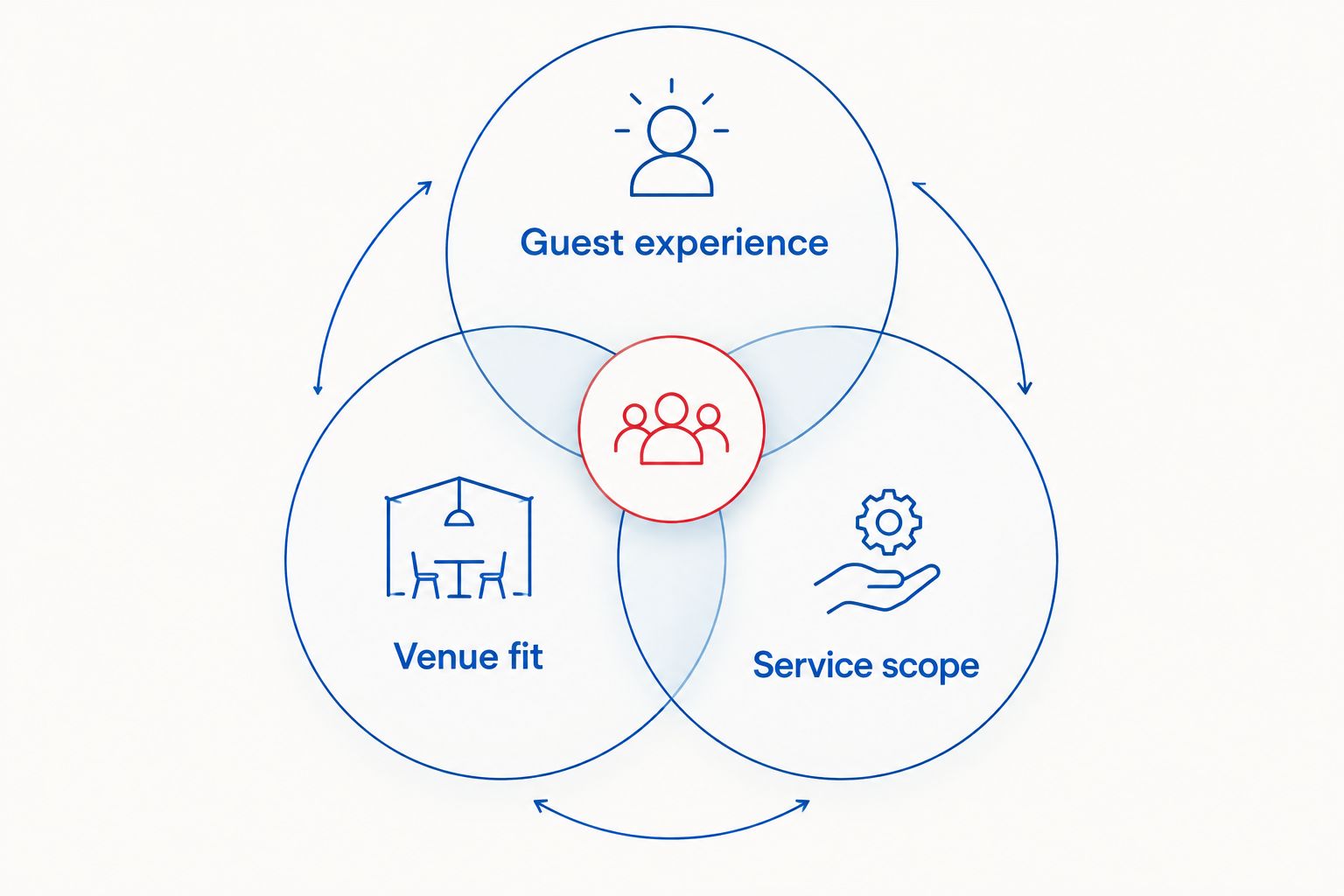
Before choosing dishes, settle 3 planning priorities: Guest experience, Venue fit and Service scope. Together, they turn a lovely idea into a clear conversation about hosting.
- Guest experience: Describe what guests should be doing during the meal, and identify seating, mobility and dietary considerations.
- Venue fit: Share the room layout, access information and known venue requirements. Compare 2 floor plans if you are deciding between seated and reception-style service.
- Service scope: Ask which tasks are included, which belong to the venue and which remain yours to arrange.
For 2027 and 2028 weddings, share your intended date and venue status when you enquire. Ask for date confirmation directly rather than assuming an enquiry reserves anything.
When you are ready, start your catering enquiry with the occasion, location, expected attendance and service style you are considering. Tell Fork + Farm what you want the gathering to feel like, as well as what you need it to do.
Which Calgary catering style should you choose?
Choose plated service if you are undecided and a seated meal is central to your event. Choose family-style when sharing at the table matters more, or a buffet when individual selection is the priority.
For an interactive reception, discuss chef stations. For a conversation-led gathering, discuss cocktail-style service and make the meal expectations clear. The right choice should feel natural to your occasion, not like a format you have to persuade the room to accommodate.
FAQ
What’s the best full-service catering style for a Calgary wedding?
Plated service is the default recommendation when a seated meal anchors the wedding reception. Family-style suits shared-table hospitality, while other formats suit couples who want more movement or individual selection.
Is family-style catering better than a buffet?
Family-style is better for guests sharing food while remaining at their tables; a buffet is better for guests choosing dishes at a separate service area. Table space and accessible routes help determine which fits your venue.
What should full-service catering include?
Full-service catering should have a clearly agreed scope of responsibilities. Ask who handles setup, food service, clearing, equipment, rentals and beverage arrangements rather than assuming every task is included.
What’s the best catering style for a corporate Christmas party?
Choose the catering style around the Christmas party’s programme. A seated dinner suits a meal-led occasion, while stations or cocktail-style service suit a gathering centred on conversation; confirm the proposed format with your caterer.
Can cocktail-style catering replace a wedding dinner?
Discuss a dinner-replacement reception explicitly with your caterer rather than treating all cocktail-style catering as a full meal. The menu, service plan and invitation wording need to reflect what guests will receive.
How should I enquire about Calgary wedding catering for 2027 or 2028?
Share your intended date, venue status, expected attendance and preferred service style when you enquire. Ask the caterer to confirm the date and proposed arrangements directly before making further plans around them.
One last thing
Before finalising your 2026 event layout, trace a guest's journey from arrival to food, seating and back into conversation. Include someone using a mobility aid in that mental walk-through. A service style earns its place when the experience works beyond the table photograph.
Related guides
- Wedding catering menu styles for Calgary celebrations
- Corporate catering ideas for Calgary office holiday parties
- Catering options for Calgary wedding venues


