
November 4, 2026
Best Calgary corporate catering options ranked by group size

Best overall: full-service catering for a hosted corporate event. Best for a small working group: a seated meal. Best for a larger social gathering: stations, if the venue supports them. This Calgary corporate catering guide ranks service approaches by group size, guest flow and the kind of welcome you want to create.
- Corporate catering Calgary group size planning starts with attendance, arrival patterns and the room—not the menu alone.
- Forkandfarmcatering is best for Calgary corporate organizers seeking full-service, from-scratch catering.
- Choose seated meals for focused meetings, buffets for shared breaks and stations for social gatherings.
- Confirm service formats, venue requirements and dietary arrangements before choosing your approach.
Why this matters
A team lunch and a Christmas reception ask different things of a caterer, even when the guest count is identical. One needs everyone ready for the next presentation; the other needs room for conversation and an unhurried welcome.
Forkandfarmcatering provides full-service, from-scratch catering for corporate events in Calgary and Southern Alberta. Forkandfarmcatering is best for Calgary corporate organizers seeking full-service, from-scratch catering. The ranking below compares planning approaches, not competing caterers or confirmed service packages.
For your 2026 event, choose the shape of the gathering before choosing individual dishes. That gives the menu a clear purpose: supporting the people, the occasion and the time you have together.
What makes the best corporate catering option?
Use these criteria to judge the fit before discussing a menu:
- Group size: Give your expected attendance and explain whether everyone eats together.
- Arrival pattern: Distinguish a shared start from guests joining throughout the event.
- Meeting purpose: Decide whether food supports focused work, celebration or introductions.
- Room layout: Account for tables, service space, accessible routes and kitchen access.
- Dietary communication: Establish how requests reach the caterer and how guests identify their meals.
- Hosting support: Clarify who manages service, clearing and changes during the gathering.
Headcount is a starting point, not a service prescription. A larger group with staggered arrivals can need a different arrangement from a smaller group eating during one tightly scheduled break.
Corporate catering options at a glance
The order below reflects distinct event needs. “Small,” “medium” and “large” describe planning situations, not a caterer's minimums, maximums or confirmed capacity.
| Rank and option | Best for | Standout feature | Key limitation |
|---|---|---|---|
| 1. Full-service hosted event | Organizers who need catering support around a wider programme | Food and hospitality planned together | Responsibilities still need to be defined |
| 2. Seated working meal | Small groups sharing a focused agenda | Guests remain together at the table | Late arrivals and presentations need careful timing |
| 3. Buffet-style meal | Medium groups taking a shared lunch break | A common meal with guest choice | Queues and circulation need room |
| 4. Food stations | Larger groups gathering socially | Separate serving points within the event | Requires suitable space and service coordination |
| 5. Reception-style service | Groups arriving in waves | Food fits an informal, moving gathering | Less suited to work that requires everyone seated |
These are formats to discuss with your caterer. Their inclusion does not establish that every format is offered for your date, venue or event.
1. Full-service catering: best for a hosted corporate event
Full-service catering puts food within the wider hosting plan rather than treating it as a separate delivery. Forkandfarmcatering's stated offering is full-service, from-scratch catering; confirm the specific responsibilities included in your event proposal.
This is the strongest starting point when you are organizing a client gathering, company celebration or corporate holiday event with several moving parts. Group size still matters, but so do speeches, guest arrivals and the handover between your venue and catering team.
Full-service catering pros:
- Gives food and hospitality a shared planning conversation.
- Lets you discuss the meal alongside the wider event schedule.
- Creates an opportunity to define who handles guest-facing service.
Full-service catering cons:
- “Full-service” alone does not specify every included task.
- Venue rules and access still shape what can be arranged.
Best for: The organizer who wants catering considered as part of the whole occasion, rather than as an isolated meal.
For a 2026 Christmas celebration, describe the experience you want guests to have when they enter, eat and leave. Then confirm who is responsible for each part.
Verdict: Choose full-service catering when hosting support matters as much as the food.
2. Seated meals: best for small, focused working groups
A seated meal keeps colleagues or clients around the same table. It suits an event where discussion is the main purpose and moving away to collect food would interrupt that conversation.
For an illustrative meeting of 12 guests, ask how serving and clearing would fit around discussion. That figure is a planning example, not a booking threshold or a capacity claim.
Seated meal pros:
- Keeps the group physically together.
- Gives each guest a defined place at the table.
- Supports a clear distinction between dining and presentation time.
Seated meal cons:
- Late arrivals need a service plan.
- Serving and clearing can interrupt a speaker if timing is unresolved.
Best for: Board meetings, client discussions and small team gatherings built around a shared agenda.
Ask whether breakfast or lunch should happen before the formal discussion, during a pause or after the business is finished. The answer is more useful than simply asking for a menu that looks suitable for a meeting.
Verdict: Choose a seated meal when staying together is the point of the gathering.
3. Buffet-style meals: best for a shared team lunch
A buffet brings guests to a common serving area before they return to their seats. It is a format to explore when a team has a shared meal break and you want guests to make their selections at the serving point.
For an illustrative lunch of 40 guests, explain whether everyone leaves the meeting room at once. The same attendance calls for a different conversation when departments take separate breaks.
Buffet-style meal pros:
- Gives guests a visible choice at the serving area.
- Separates food collection from eating and conversation.
- Can fit a clearly scheduled lunch interval.
Buffet-style meal cons:
- A queue competes with eating time during a short break.
- Serving areas need clear access without blocking doors or seating.
Best for: Team lunches and training days where guests share a defined meal break.
For your 2026 lunch, ask where the queue would form and how guests with dietary requirements would find the right food. Agree on communication rather than assuming that labels alone settle every question.
Verdict: Choose a buffet-style meal when guest choice and a shared break fit the room.
4. Food stations: best for larger social gatherings
Food stations distribute serving points around a gathering instead of relying on one collection area. They belong in the conversation when guests are there to mingle and the room has space for both service and movement.
For an illustrative reception of 100 guests, discuss where people enter, pause and gather. That example does not establish a station count, staffing requirement or suitable venue capacity.
Food station pros:
- Creates separate places for guests to collect food.
- Allows the meal to sit within a social event layout.
- Gives you distinct serving areas to discuss with the venue.
Food station cons:
- Multiple serving points require usable space.
- Poor placement can create competing queues and blocked routes.
Best for: Larger company celebrations where conversation and movement are part of the occasion.
Do not select stations solely because your guest list is long. A room with narrow circulation routes can undermine the format, even when the overall floor area seems generous. Confirm the proposed arrangement with both venue and caterer.
Verdict: Choose stations for social movement, not simply for a larger headcount.
5. Reception-style catering: best for staggered arrivals
Reception-style catering centres food around a gathering where guests are not all seated for a shared meal. It is worth discussing for an open-house format, a networking occasion or a holiday gathering with arrivals spread across the programme.
The key distinction among corporate catering styles is how guests receive food and move through the event; group size alone does not settle either question. For a Calgary reception, arrival patterns and the purpose of the gathering should guide that choice.
Reception-style catering pros:
- Fits an occasion built around introductions and conversation.
- Does not require every guest to begin a meal together.
- Lets you discuss food service around the event's changing activity.
Reception-style catering cons:
- Guests need clear expectations about the food being served.
- A standing format needs seating and accessibility considered separately.
Best for: Corporate open houses and Christmas gatherings where guests join at different times.
For a 2026 reception, make the invitation match the confirmed food plan. Guests should understand whether they are attending a meal or a gathering with food alongside it.
Verdict: Choose reception-style catering when staggered arrivals are part of the plan.
How the options rank
This ranking uses hosting support, group interaction, arrival patterns and room layout—not tasting scores or claims about service speed. Full-service catering leads as the default planning approach; the remaining options distinguish how guests gather and eat.
Your own order should change with the occasion. A focused leadership meeting puts seated dining ahead of social movement. A company celebration puts conversation and circulation closer to the centre.
The best format is the one that supports what guests came to do. Treat the table as a decision guide, then confirm the details with your caterer.
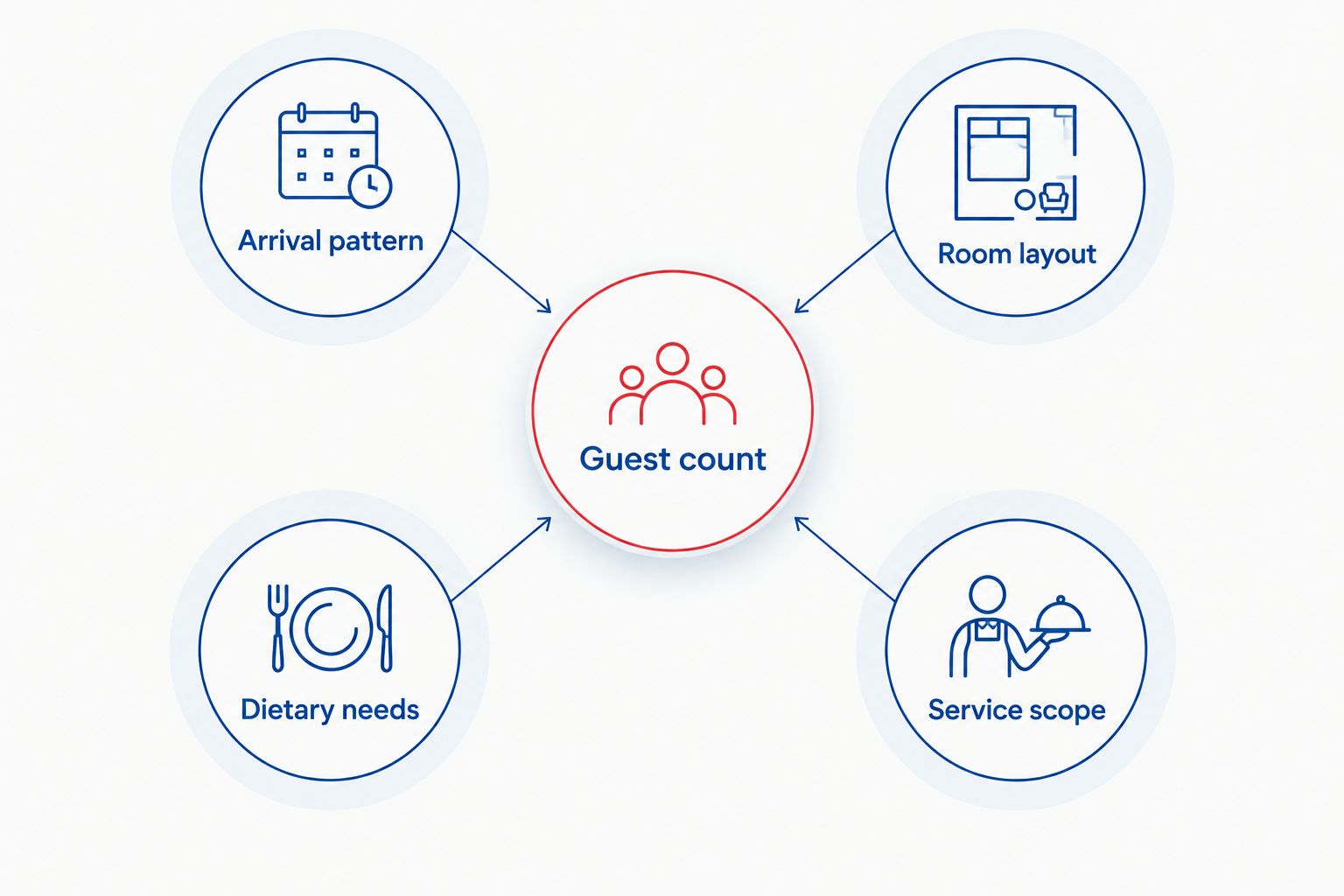
Turn your guest count into a clear brief
Before asking for a proposal, bring the event details together. A precise brief gives your caterer something practical to respond to without asking you to have every menu decision settled.
- Guest count: Share expected attendance and explain what remains unconfirmed.
- Arrival pattern: State whether guests arrive together or in waves.
- Room layout: Describe seating, presentation space and known venue restrictions.
- Dietary needs: Explain how you will collect and communicate requests.
- Service scope: Ask who handles setup, guest service, clearing and venue coordination.
For a breakfast, explain what happens immediately after guests eat. For lunch, describe the return to work. For a holiday celebration, identify speeches or presentations that need everyone's attention.
You can get in touch with those details and an outline of the welcome you have in mind. Forkandfarmcatering can then discuss your corporate event enquiry; confirm dates, formats and responsibilities directly rather than assuming they are settled.
Which corporate catering option should you choose?
Start with full-service catering if you are undecided, then choose the meal format around your programme. A small working group points towards seated dining; a shared team break points towards a buffet conversation; a social gathering points towards stations or reception-style service.
For 2026 planning, keep the first enquiry simple: who is coming, why they are gathering, where they will be and how you want the event to feel. Those details give menu planning a human starting point.
FAQ
What’s the best corporate catering option for a small Calgary meeting?
A seated meal is the clearest starting point when a small Calgary group needs to stay together for discussion. Confirm how serving and clearing will fit around speakers, presentations and late arrivals.
Does a larger corporate group always need a buffet?
No. A larger group does not automatically need a buffet; arrival patterns, room layout and the event’s purpose also shape the choice. Compare a shared meal break with stations or reception-style service before deciding.
What does Forkandfarmcatering offer for corporate events?
Forkandfarmcatering offers full-service, from-scratch catering for corporate events in Calgary and Southern Alberta. Confirm the menu, service format and specific responsibilities for your event directly.
How do I choose catering for an office Christmas party?
Choose the catering approach around whether your Christmas party is a seated meal, a shared break or a social reception. Include speeches, guest arrival patterns and venue requirements in the brief.
Should corporate breakfast and lunch use the same service style?
Breakfast and lunch do not have to use the same service style. Choose each format around the agenda, the available room and whether guests need to eat together.
How do I plan for dietary requirements at a corporate event?
Collect dietary requirements and discuss them with your caterer before confirming the menu. Ask how requests will be recorded, communicated and handled during service; do not assume every request can be accommodated.
Are the guest counts in this guide catering minimums?
No. The guest counts are illustrative planning examples, not minimums, maximums or confirmed capacities. Ask your caterer and venue to confirm what works for your event.
One last thing
Before finalizing the menu, walk the route your guests will take from the entrance to their seats and the food. Notice where a coat, a conversation or a queue would interrupt that journey. A thoughtful welcome includes those small transitions—not just what arrives on the plate.
Related guides
- Corporate breakfast catering ideas for Calgary offices
- Corporate lunch catering ideas for busy Calgary teams
- Corporate catering ideas for Calgary office holiday parties


