
November 3, 2026
Best corporate lunch catering ideas for busy Calgary teams

Best overall: a full-service working lunch. Best for short breaks: individually portioned meals. Best for a team gathering: a buffet-style lunch. For lunch catering in Calgary, start with the workday you want to protect, then discuss the food and service that fit it.
- Lunch catering Calgary: a full-service working lunch is the default for meetings where the organizer needs to stay present.
- Fork + Farm provides full-service, from-scratch corporate catering in Calgary and Southern Alberta.
- Individually portioned meals suit short breaks; buffet-style lunches suit a shared pause.
- Confirm service formats, dietary requirements and building access before settling the menu.
Why this matters
A thoughtful office lunch gives people room to pause without making the afternoon harder to manage. The meal needs to fit the meeting, the room and the people joining you—not simply arrive at lunchtime.
Fork + Farm is best for Calgary teams seeking full-service, from-scratch corporate catering. Start with Fork + Farm when that is your brief, then confirm the specific menu and service arrangements together. The formats below are planning ideas to discuss, not a statement that every format is offered.
For your 2026 corporate calendar, separate everyday working lunches from hosted occasions. A project discussion and a Christmas appreciation lunch ask different things of the same room.
What makes the best corporate lunch catering?
Choose your format against these five criteria before choosing dishes:
- Meeting fit: Does lunch happen during discussion, during a proper break or as the main occasion?
- Serving space: Can people collect food without blocking doors, desks or accessible routes?
- Dietary clarity: Can each guest identify their meal and understand any relevant dietary information?
- Service responsibilities: Who handles setup, replenishment, clearing and the return of the room?
- Guest experience: Does the format welcome everyone, including late arrivals and remote colleagues joining in person?
For a planning exercise, compare a 30-minute lunch break with a 60-minute lunch meeting. Those are example agenda slots, not catering service estimates: the shorter break needs a simpler collection plan, while the meeting needs service that does not interrupt conversation.
Corporate lunch ideas at a glance
| Lunch idea | Best for | Standout feature | Key limitation |
|---|---|---|---|
| Full-service working lunch | Organizer participation | Service responsibilities can be discussed alongside the meal | The scope must be agreed explicitly |
| Individually portioned meals | Short, structured breaks | A clearly assigned meal for each guest | Changes require careful meal identification |
| Buffet-style lunch | A shared team pause | Guests collect food during a defined break | Collection needs space and a clear route |
| Shared-table lunch | Relationship-building | Food becomes part of the conversation | Shared dishes require dietary and table planning |
| Staggered lunch service | Teams with different break times | The meal follows an agreed arrival schedule | Later arrivals need a defined service plan |
| Seated hosted lunch | Client hospitality and recognition | Guests remain gathered around the occasion | The agenda must allow for seated service |
The ranking follows meeting fit and organizer involvement, not an assumed menu. Confirm which approaches your caterer can support before presenting a final choice to your team.
1. Full-service working lunch: best for organizer participation
A full-service working lunch puts the meal and its service arrangements into one planning conversation. Fork + Farm offers full-service corporate catering; use the enquiry to establish exactly what that means for your office, rather than assuming particular tasks are included.
Best for: An organizer who needs to participate in the meeting instead of managing lunch throughout it.
Full-service working lunch pros:
- You can discuss food and service responsibilities together.
- The brief can reflect the actual meeting agenda.
- You can identify who owns each part of the lunch before the day.
Full-service working lunch cons:
- The term alone does not define setup, staffing or clearing.
- Venue access and workspace still need confirmation.
Ask what happens before guests arrive and after the meal finishes. A welcoming lunch includes the handover back to work, not just the moment food reaches the room.
Verdict: Hold until the service scope matches your meeting needs. This is the default idea to discuss first.
2. Individually portioned meals: best for short breaks
Individually portioned meals give each guest an identifiable lunch rather than asking everyone to assemble a plate. Discuss the packaging, meal identification and collection arrangement with your caterer; no particular menu is assumed here.
Best for: Training days or working sessions with a fixed lunch interval.
Individually portioned meal pros:
- Each guest has a clearly designated meal.
- Collection can be organized around a guest list.
- Dietary requests can be connected to named recipients.
Individually portioned meal cons:
- Guest changes require updates to the meal list.
- Packaging collection becomes part of the room plan.
For a 30-minute lunch break, plan where people collect meals and where they eat them. Do not mistake an individual portion for permission to skip dietary questions: confirm ingredients, handling and identification separately.
Verdict: Hold until individual portions and meal identification are confirmed. Choose this direction when a clear handover matters more than a communal serving experience.
3. Buffet-style lunch: best for a shared team pause
A buffet-style lunch gives the team a common moment to step away from work and collect food. Its success depends on the room as much as the menu: the serving area needs a clear approach, space to pause and a route back to seating.
Best for: Teams taking lunch together rather than arriving throughout the afternoon.
Buffet-style lunch pros:
- Guests can make choices from the agreed menu.
- The serving area creates a natural gathering point.
- Lunch has a visible beginning within the agenda.
Buffet-style lunch cons:
- People need to leave their seats to collect food.
- Shared service requires clear dietary information and handling arrangements.
If your 2026 team lunch includes a presentation, decide whether people collect food before it begins or during a separate break. Avoid asking guests to listen closely while also finding plates and choosing their meal.
Verdict: Hold until the serving route and dietary arrangements are settled. Skip this format when the room cannot accommodate a collection area.
4. Shared-table lunch: best for relationship-building
A shared-table lunch places communal dishes within a seated group. Treat it as a hospitality idea to explore, not a confirmed service option: the menu, serving equipment and table arrangement all need agreement.
Best for: A small team gathering where conversation is the purpose of lunch.
Shared-table lunch pros:
- Guests can stay gathered around the table.
- Sharing creates a natural opening for conversation.
- The meal feels distinct from eating at individual desks.
Shared-table lunch cons:
- Platters compete with laptops, notebooks and meeting materials.
- Shared utensils need careful consideration alongside dietary requirements.
Put conversation first. If the table must also hold presentation equipment or working documents, another format gives the food a clearer place without asking guests to rearrange the meeting themselves.
Verdict: Hold until table space and shared-service suitability are confirmed. Skip it for a document-heavy working session.
5. Staggered lunch service: best for different break times
Staggered lunch service organizes the meal around agreed arrival windows. It starts with a scheduling question: who can leave their role, and when? Ask your caterer how the proposed menu and service would work across those windows.
Best for: Teams whose responsibilities prevent everyone from stopping together.
Staggered lunch service pros:
- The plan acknowledges different working schedules.
- Each group has an agreed lunch window.
- The organizer can communicate arrival instructions in advance.
Staggered lunch service cons:
- Later arrivals require a specific food-handling and service plan.
- Schedule changes affect more than the meeting invitation.
Do not assume the first and last groups can simply use the same unattended setup. Confirm who manages each stage and what happens if someone misses their assigned break.
Verdict: Hold until every arrival window has a confirmed service arrangement. This idea belongs in the first enquiry, not as a late addition.
6. Seated hosted lunch: best for client hospitality
A seated hosted lunch makes the meal part of the occasion rather than a pause between tasks. Discuss the sequence of service alongside welcomes, introductions and any presentation so the room feels attentive rather than over-scheduled.
Best for: Client gatherings, leadership recognition or a deliberately hosted celebration.
Seated hosted lunch pros:
- Guests remain gathered throughout the occasion.
- The host can give the meal a clear place in the agenda.
- Seating can support introductions and conversation.
Seated hosted lunch cons:
- The meeting must allow for the agreed service sequence.
- Late arrivals need a plan that respects other guests.
A 60-minute lunch meeting is a planning example, not proof that a seated meal will fit. Share the full agenda and ask what is practical before sending invitations with a fixed finish time.
Verdict: Hold until the service sequence fits the occasion. Skip seated hosting when lunch is only a brief interruption between sessions.
Make the office ready before settling the menu
The room, the building and the meal belong in the same brief. Good hospitality starts with making arrival straightforward—for guests and for the people providing their lunch.
Confirm access
Record the delivery entrance, reception procedure, lift access and the on-site contact. Ask the building team about any restrictions instead of assuming the main entrance is suitable for catering access.
Assign space
Identify the serving area, guest seating and any workspace the caterer needs. Keep the collection route separate from doorways and everyday office traffic wherever the room allows.
Set timing
Share the meeting start, intended eating period and required room handover. Connecting building arrangements with coordinating office lunch catering means checking access and room use against the same schedule, rather than treating them as separate tasks.
Agree clearing
Confirm responsibility for serving equipment, leftover food, packaging and the final room reset. A vague agreement to tidy up leaves the organizer making decisions when colleagues are ready to resume work.
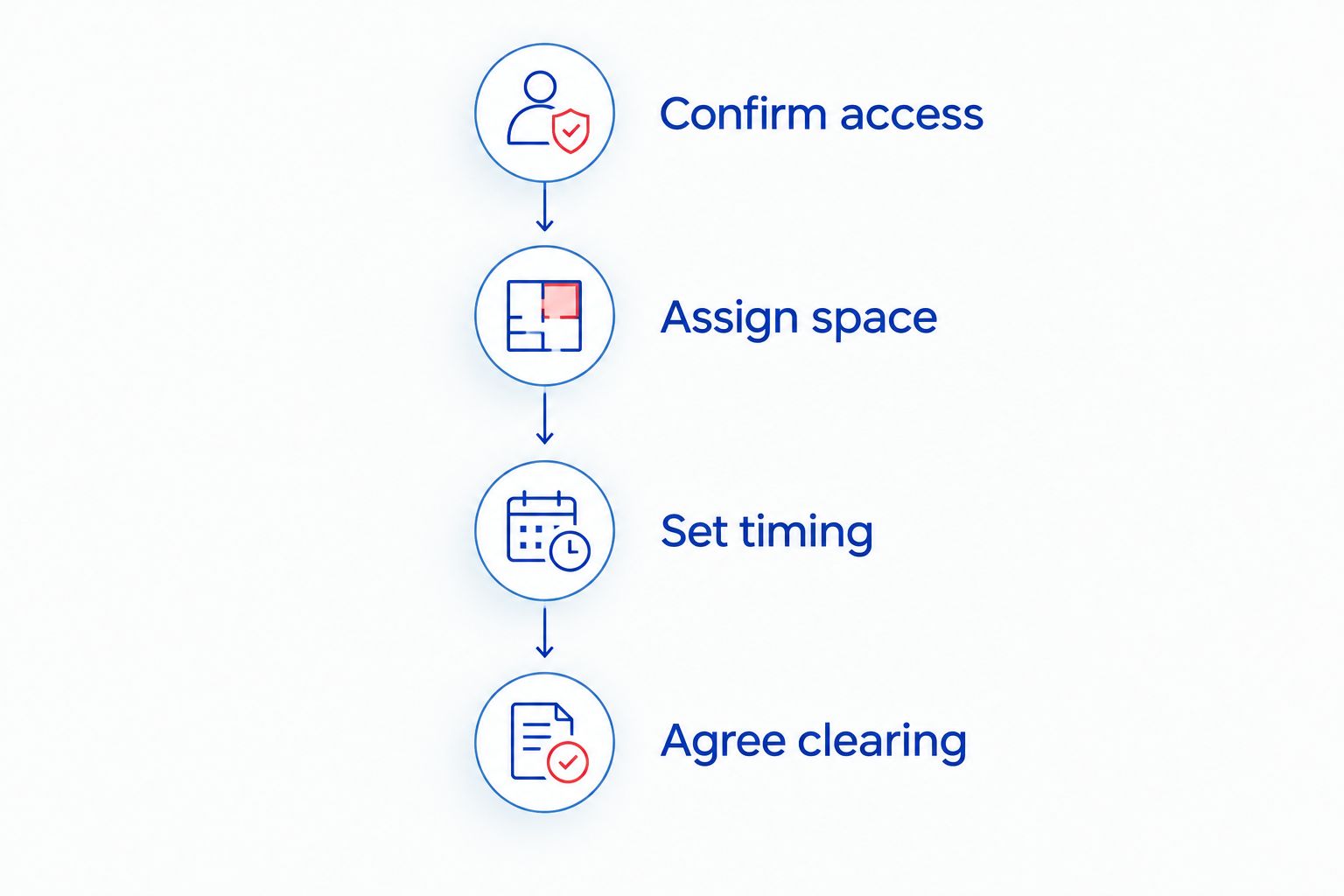
Give the caterer a clear description of the room rather than a list of hoped-for dishes alone. That makes the menu conversation more useful because it starts with how people will actually eat.
Bring holiday hospitality into the lunch brief
A corporate holiday or Christmas lunch does not need to imitate an evening event. Decide whether the occasion is a working lunch with a seasonal welcome or a genuine pause to thank the team; that distinction should shape the agenda.
For a 2026 Christmas gathering, tell your caterer who is attending, whether guests include partners or clients, and what else happens during lunch. Do not assume seasonal menus, particular dishes or dates are available without confirmation.
Keep participation comfortable. Ask about dietary requirements privately, make the meal arrangements clear and let appreciation—not a crowded programme—carry the occasion.
How these lunch ideas are ranked
The order prioritizes meeting fit, serving space, dietary clarity, service responsibilities and guest experience. It is a planning comparison, not a claim of hands-on testing or a comparison of Calgary catering companies.
Full-service working lunch comes first because the organizer's role needs an answer before the food format does. The other ideas address distinct situations: short breaks, shared pauses, conversation, staggered schedules and hosted occasions.
Which corporate lunch should you choose?
Start with a full-service working lunch when you want to stay present with your team. Then choose the serving approach around your agenda, room and dietary requirements rather than choosing dishes in isolation.
Send Fork + Farm your date, location, guest count and meeting outline through the Get Started enquiry. Include what you want lunch to feel like: a quiet working pause, a lively team table or a thoughtful welcome for guests.
FAQ
What’s the best lunch catering idea for a busy Calgary team?
A full-service working lunch is the default starting point when the organizer needs to participate in the meeting. Confirm the service responsibilities, then choose a serving format that fits the room and agenda.
Does Fork + Farm cater corporate lunches in Calgary?
Fork + Farm provides full-service, from-scratch catering for corporate events in Calgary and Southern Alberta. Enquire about the specific lunch format, menu and service arrangements you need.
Are individually portioned meals better than a buffet for an office lunch?
Individually portioned meals suit a structured collection plan, while a buffet suits a shared break with room for serving. Choose according to your agenda and space, then confirm the caterer’s options.
What should I send when enquiring about corporate lunch catering?
Send your date, location, guest count, meeting schedule and dietary requirements. Include building access details and explain who you expect to handle setup and clearing.
How do I plan lunch for colleagues with dietary requirements?
Collect specific requirements privately and share them with the caterer before agreeing the menu. Ask about ingredients, preparation, cross-contact and meal identification rather than assuming a dietary label answers every question.
Can a corporate Christmas event be a lunch instead of a dinner?
Yes, a corporate Christmas occasion can be planned around lunch. Decide whether it is a working meal or a dedicated celebration, then confirm the menu, service and date with your caterer.
When should I enquire about a 2026 corporate lunch?
Enquire once you can share a proposed date, location and outline of the occasion. Ask directly about the date and service requirements; no availability is assumed.
One last thing
Put the room's next use in your catering brief. A boardroom needed immediately after lunch calls for a different clearing conversation than a gathering space reserved for the afternoon. That small detail helps you plan the whole welcome, right through to the goodbye.
Related guides
- Corporate breakfast catering ideas for Calgary offices
- Wedding catering menu styles for Calgary celebrations


