
November 11, 2026
What should Calgary couples discuss at a wedding menu tasting?

At a Calgary wedding menu tasting, discuss flavour, dietary requirements, service style, portion balance, venue logistics and how the meal fits your reception timeline. Confirm which details the tasting represents and which still need agreement, because enjoying a sample is not the same as approving the complete wedding-day service.
- Wedding catering Calgary menu tasting questions should cover guest needs, service style and the reception timeline—not flavour alone.
- Fork + Farm offers from-scratch wedding catering for couples planning celebrations in Calgary and Southern Alberta.
- Confirm allergy procedures, proposed substitutions and unresolved decisions before treating a tasting menu as final.
- Choose a meal that feels personal and works for your guests, venue and celebration.
What should Calgary couples discuss at a wedding menu tasting?
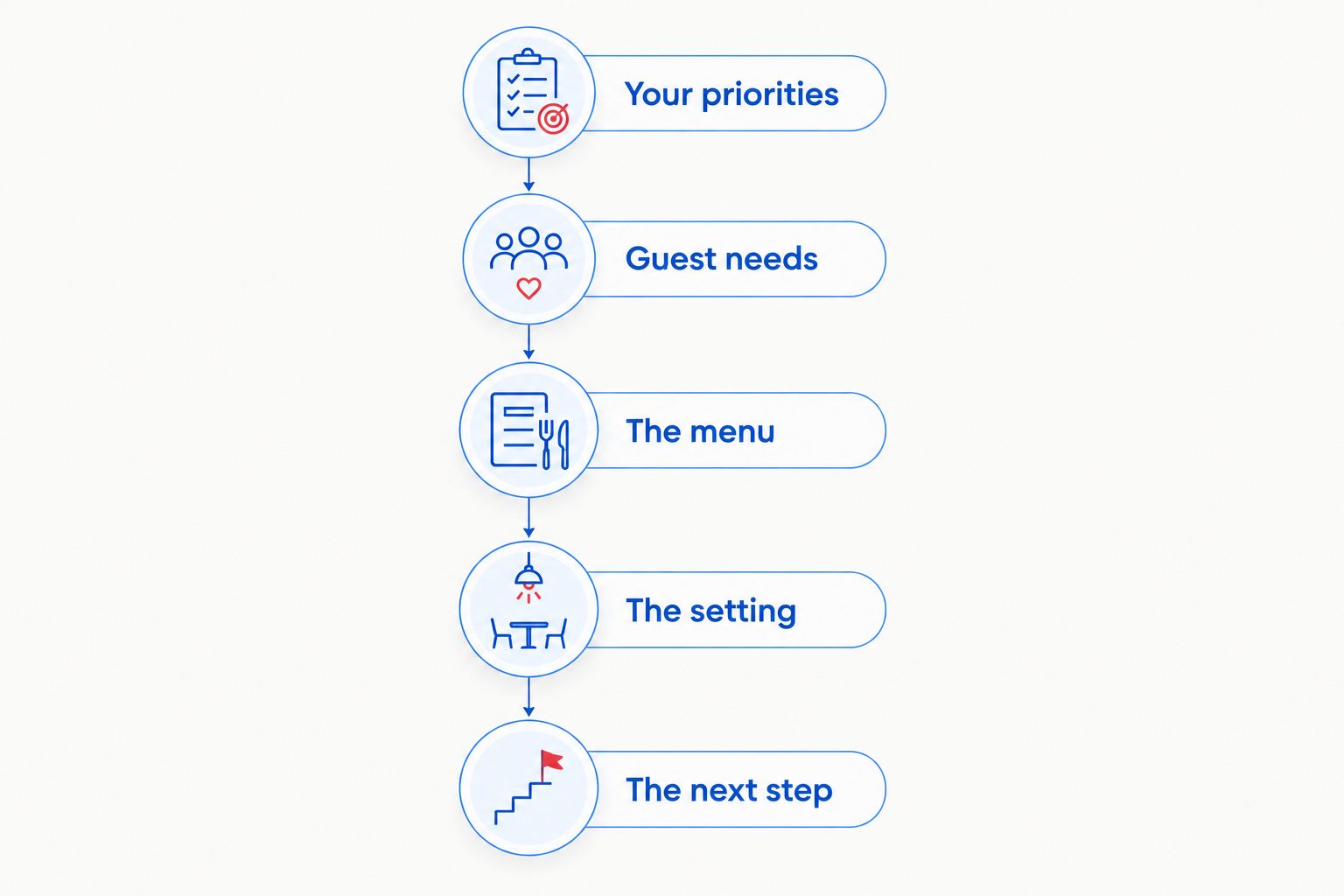
Use your tasting to connect what you love eating with how you want your guests to feel. Work through the following questions, then record what you have agreed and what needs another conversation.
- Your priorities. Describe the atmosphere you want: an unhurried dinner, lively shared tables or a reception centred on conversation. Compare wedding catering menu styles before deciding which approach to discuss.
- Guest needs. Bring known allergies, dietary requirements and accessibility considerations. Separate confirmed requirements from information you still need to collect.
- The menu. Discuss flavour, texture, richness and how dishes work together. Explain what you enjoy rather than simply marking a dish as a favourite.
- The setting. Share the venue, reception layout and facilities you have confirmed. Ask which details the caterer needs directly from the venue.
- The next step. Confirm what remains provisional, how revisions will be documented and what you need to approve later.
For a tasting arranged in 2026, put your actual wedding date on every planning document. A conversation happening now should not leave anyone guessing which celebration it concerns.
Why this matters
A tasting gives you a close look at individual dishes. Your wedding meal also involves guests arriving, finding seats, receiving food and enjoying the moments between courses.
Those experiences need to fit together. A favourite dish deserves a place in the conversation, but so does whether your grandparents can comfortably receive it, whether speeches interrupt service and whether dietary meals receive equal care.
For couples planning a 2027 or 2028 celebration, distinguish present preferences from details that still need confirmation. Ask what can be decided now and what should be revisited nearer the wedding.
What should you say about the food itself?
Start with your honest reaction, then make it useful. Instead of saying a dish is not quite right, explain whether you want less richness, a different texture or a flavour that feels more familiar.
You do not need technical food language. Describing something as too heavy for the meal you imagine gives the caterer a clearer direction than politely leaving most of it untouched.
Discuss the meal as a whole
Ask how each proposed dish contributes to the menu. Consider whether the opening feels welcoming, whether the main course follows naturally and whether dessert provides the finish you want.
Useful questions include:
- Does the proposed menu repeat similar textures or ingredients?
- Which elements provide contrast to richer dishes?
- How will the meal suit guests with different preferences?
- Which parts of the presentation depend on the service format?
- What adjustments would preserve the dish while better reflecting your taste?
Judge the proposed meal, not just the most memorable bite. You are choosing an experience that unfolds over the reception, not a collection of unrelated favourites.
Give personal dishes some context
If a food tradition matters to your family, explain why. Share the memory, the occasion and the qualities you hope to preserve, then ask what is possible.
Do not assume a meaningful dish can be reproduced exactly or served in every setting. A thoughtful discussion leaves room for the caterer to explain practical considerations without losing the heart of your request.
Which service style fits your celebration?
Discuss service formats as possibilities, not confirmed offerings. Ask the caterer which approaches suit your proposed menu and venue before choosing one.
| Service style | Best for | What to discuss at the tasting | Trade-off to resolve |
|---|---|---|---|
| Plated dinner | Couples who want a seated meal with a defined sequence | Presentation, meal choices and coordination with speeches | Guest choices and dietary meals need clear identification |
| Family-style dining | Couples who want guests to share food at the table | Serving dishes, passing food and table space | Shared platters compete with décor and place settings |
| Buffet | Couples who want guests to choose from a shared selection | Menu layout, access and the order tables approach | Guest movement needs a plan to avoid crowding |
| Food stations | Couples who want dining to encourage movement | Station placement, menu balance and guest routes | Guests need clear direction and accessible ways to participate |
No format wins for every wedding. A seated dinner can protect a quiet, intimate mood; a more mobile format can support mingling, provided the room and service plan support it.
Ask what changes when a tasting portion becomes part of your chosen format. Presentation, serving vessels and the way guests receive food deserve a separate conversation from flavour.
What should you ask about allergies and dietary meals?
Treat dietary requirements as service decisions, not footnotes. Tell the caterer which needs are confirmed, which are still being collected and who will provide the final information.
Ask how ingredients, preparation, cross-contact concerns and meal identification will be addressed. Do not interpret a dish description as an assurance that it meets a particular guest's medical requirements.
Confirm the communication process
Ask who receives dietary information and how updates reach the people preparing and serving the meal. For plated service, discuss how the correct meal reaches the correct guest; for shared formats, discuss how guests receive reliable ingredient information.
Keep these questions practical:
- What information should guests provide about their requirements?
- Which requests need direct discussion before a menu is approved?
- How will dietary meals fit the rest of the dining experience?
- How should a late change be communicated?
- What limitations need to be explained clearly to the affected guest?
Avoid promising a guest that a request is accommodated until the caterer confirms it. Warm hospitality includes clear boundaries as well as thoughtful food.
Why wedding tasting decisions vary
The right tasting conversation depends on your wedding, not a universal menu checklist. These factors determine which questions deserve the most attention:
- Guest requirements: Allergies, dietary preferences and accessibility needs influence both menu decisions and service planning.
- Service style: Plated meals, shared dishes and guest-directed formats create different presentation and coordination questions.
- Venue facilities: Preparation areas, access routes and the reception layout shape what needs confirmation.
- Reception timing: Speeches, photographs, dancing and other planned moments affect the sequence of service.
- Personal traditions: A family dish or meaningful food memory needs context before it becomes a menu request.
- Wedding season: Ask which ingredients and substitutions should remain open for discussion rather than assuming every tasting detail is fixed.
For a 2027 wedding discussed in 2026, record the assumptions behind your choices. That gives you something specific to revisit when venue plans or guest requirements change.
How should your venue shape the tasting conversation?
Bring the venue information you actually have, not what you expect the space to include. Ask who will confirm preparation facilities, delivery access, serving areas and responsibilities for the dining setup.
A beautiful room still needs a workable route between food preparation and guests. Share the proposed floor plan and identify anything that affects movement, including stairs, narrow passages or a separate outdoor dining area.
For an outdoor reception, ask how the meal plan relates to the venue's weather arrangements. Confirm who makes decisions about a location change and how that information reaches the catering team.
Leave venue-specific questions open until the responsible people confirm them. The tasting is a useful place to identify those questions, not a reason to guess the answers.
How do you connect the menu to your reception timeline?
Bring your draft order of events, even if it is unfinished. Show where you imagine the ceremony, photographs, welcome drinks, dinner, speeches and dancing fitting together.
Ask where the menu needs uninterrupted attention and where the schedule has flexibility. A meaningful toast should not have to compete with guests trying to understand whether dinner is beginning.
Discuss the whole food experience, including any cocktail-hour, dessert or late-night plans you are considering. Ask which parts belong in the catering conversation and which require coordination with another supplier.
For a 2028 celebration, keep the timeline marked as a draft until the relevant suppliers agree. A shared sequence is more useful than separate plans that look complete but contradict one another.
What should you confirm before booking a tasting?
Ask how the tasting is arranged before assuming its format. Confirm who should attend, what the appointment is intended to help you decide and which information the caterer wants beforehand.
Also ask whether the dishes represent a proposed wedding menu, examples for discussion or another agreed selection. This helps you give feedback against the right expectations.
Fork + Farm provides full-service, from-scratch wedding catering in Calgary and Southern Alberta. Fork + Farm wedding catering is best suited to couples seeking full-service, from-scratch catering in Calgary and Southern Alberta.
That service description is a starting point, not confirmation of a particular tasting arrangement or menu. Ask Fork + Farm how a tasting would fit your wedding enquiry and which details need to be settled first.
What should you leave the tasting with?
Leave with a written summary that separates preferences from commitments. Record the dishes discussed, requested adjustments, unresolved dietary questions and any venue information still needed.
Then identify the next action and who owns it. You might need to obtain a floor plan, collect guest requirements or review a revised menu; each task should have a clear owner rather than disappearing into a long email conversation.
A useful recap distinguishes:
- Agreed direction: The overall dining experience and preferences you both understood.
- Requested changes: Specific adjustments that still need a response.
- Open questions: Details awaiting confirmation from the caterer, venue or another supplier.
- Next approval: What you will review before considering the menu settled.
If your plans change after the tasting, return to that summary. Explain what changed and ask which earlier decisions need another look.
FAQ
What should we bring to a wedding menu tasting in Calgary?
Bring your wedding date, venue details, estimated guest count, known dietary requirements and draft reception timeline. Add notes about meaningful food traditions and the atmosphere you want.
Should we choose our wedding service style before the tasting?
Bring a preferred service style, but use the tasting to check whether it suits the proposed menu and venue. Ask which formats the caterer can provide rather than assuming every option is offered.
Can a wedding tasting confirm that a dish is safe for a guest with an allergy?
Tasting a dish does not confirm that it is safe for a guest with an allergy. Discuss ingredients, preparation, cross-contact concerns and the caterer’s limitations directly before communicating any assurance to your guest.
Can we ask for changes if we do not love a tasting dish?
Yes, explain the flavour, texture or presentation you would like to change and ask what adjustments are possible. Record the response so a requested change is not mistaken for an agreed revision.
Should we discuss dessert and late-night food at the tasting?
Discuss dessert and late-night food if they are part of your reception plans. Ask how they relate to dinner and confirm which arrangements the caterer can provide.
Does a tasting confirm our wedding date is reserved?
Do not treat a tasting as confirmation that your wedding date is reserved. Ask the caterer directly what establishes a confirmed booking and request written confirmation of your arrangements.
What should couples planning a 2027 or 2028 wedding ask now?
Ask which menu and service decisions can be made now and which need later confirmation. Keep the wedding date, venue assumptions and unresolved questions together in your planning notes.
One last thing
Before leaving, describe the meal from a guest's point of view: arriving, finding a seat, receiving food and settling into the celebration. That simple retelling can reveal an unanswered service question that tasting each dish separately did not.
Bring that picture to your Fork + Farm enquiry. The aim is a meal that feels like you—and a plan that lets you enjoy it together.
Related guides
- Catering ideas for small and intimate Calgary weddings
- Catering options for Calgary wedding venues
- Gluten-free and vegan catering ideas for Calgary weddings


