
November 2, 2026
Best corporate breakfast catering ideas for Calgary offices

Best overall: a meeting-first breakfast. Best for flexible arrivals: a staggered welcome. Best for client visits: a hosted breakfast. For breakfast catering, Calgary offices can start with the occasion and build the meal around it; Fork + Farm provides full-service, from-scratch catering for corporate events in Calgary and Southern Alberta.
- For breakfast catering Calgary offices can shape around work, choose a meeting-first format as the default.
- Fork + Farm suits teams seeking full-service, from-scratch corporate event catering in Calgary and Southern Alberta.
- Choose staggered arrivals for flexible schedules, shared tables for team connection, and hosted breakfasts for client conversations.
- Confirm menus, dietary requirements, venue responsibilities and service details before finalizing your corporate breakfast.
Why this matters
A thoughtful office breakfast makes room for both the meal and the reason people have gathered. A working session needs a different rhythm from a client welcome or a Christmas thank-you.
For your 2026 corporate calendar, begin with what guests should be doing: listening, talking, arriving gradually or celebrating together. Then discuss food and hospitality that support that purpose. These are formats to explore with your caterer, rather than a fixed menu to order without a conversation.
Fork + Farm is best for Calgary teams seeking full-service, from-scratch corporate event catering. The right breakfast brief gives that service a clear direction without deciding every detail prematurely.
What makes the best corporate breakfast catering?
Use these criteria before choosing a format. An attractive spread still needs to work in the room where you will serve it.
- Schedule fit: Decide whether eating happens before, during or separately from the meeting.
- Guest comfort: Gather dietary requirements and explain how guests will find their intended meals.
- Room flow: Keep arrivals, refreshments and food collection from competing for the same space.
- Service clarity: Confirm who handles setup, service, clearing and the final handover.
- Occasion fit: Match the hospitality to a working morning, client visit or team celebration.
- Menu practicality: Discuss food that suits the seating, utensils and attention the occasion allows.
Corporate breakfast ideas at a glance
The ranking below prioritizes an ordinary office meeting first, followed by formats for more specific occasions. Each has a different job to do.
| Breakfast idea | Best for | Standout planning feature | Key limitation |
|---|---|---|---|
| Meeting-first breakfast | Agenda-led working mornings | Separates food collection from focused discussion | Needs a clear transition into the meeting |
| Staggered welcome | Teams arriving at different times | Gives arrivals a defined hospitality window | Requires agreement on food presentation and replenishment |
| Shared team tables | Colleagues reconnecting | Makes conversation part of the occasion | Needs seating and room to gather |
| Hosted client breakfast | Relationship-focused visits | Builds the welcome around your guests | Needs coordination between the host and catering team |
| Station-style breakfast | Cross-team introductions | Encourages movement between conversation points | Needs careful circulation planning |
| Holiday appreciation breakfast | Christmas and year-end recognition | Gives thanks a dedicated place in the programme | Loses its purpose if routine business takes over |
1. Meeting-first breakfast: best for agenda-led mornings
A meeting-first breakfast gives guests a defined opportunity to eat before concentrated discussion begins. Choose this as your default when the purpose is a briefing, planning session or leadership meeting rather than an extended social occasion.
Start by asking whether food will remain in the meeting room once the agenda begins. If guests need to collect breakfast elsewhere, include that movement in the invitation and room plan. Your welcome should not depend on everyone discovering the arrangement on arrival.
Meeting-first breakfast pros:
- Gives eating and discussion distinct places in the schedule.
- Helps the organizer explain exactly when guests should arrive.
- Keeps the catering brief tied to the meeting’s purpose.
Meeting-first breakfast cons:
- Late arrivals need a plan that does not interrupt speakers.
- An overly tight transition leaves little room for conversation.
For a 15-minute briefing, consider placing the breakfast welcome before the briefing rather than trying to fit everything into the same slot. That is a planning choice, not a promised service duration; confirm the actual arrangement with your caterer.
Best for: Teams that need a clear, focused start to the working day.
Verdict: Choose meeting-first breakfast when the agenda must lead.
2. Staggered welcome: best for flexible arrival times
A staggered welcome gives breakfast a defined arrival window instead of a single shared start. It fits mornings when colleagues are coming from different locations or joining separate sessions.
The essential question is how the welcome will work for the final guest as well as the first. Discuss presentation, dietary identification, replenishment and the point when service ends. Do not assume that a format intended for a seated group will work unchanged across an extended arrival period.
Staggered welcome pros:
- Accommodates a plan built around different arrival times.
- Lets you separate the welcome from individual meeting schedules.
- Gives reception or hosting staff a clear destination for guests.
Staggered welcome cons:
- The organizer must communicate the service window clearly.
- Food presentation and clearing need attention throughout that window.
For a 2026 multi-session office event, map the arrival pattern before discussing the menu. Tell your caterer whether guests will stay nearby, move directly into meetings or return to the breakfast area later.
Best for: Offices welcoming people gradually rather than gathering everyone at once.
Verdict: Choose a staggered welcome when arrivals shape the morning.
3. Shared team tables: best for reconnecting colleagues
A shared-table breakfast puts the conversation at the centre. Guests sit together, and the meal becomes part of the gathering rather than something collected on the way to a desk.
Begin with the seating plan, not assumptions about communal platters or serving equipment. Ask your caterer which presentation suits the room and your guests. Shared seating does not require shared dishes, particularly when individual dietary arrangements need clear handling.
Shared team tables pros:
- Makes space for colleagues to talk away from their desks.
- Gives the host a natural setting for a personal welcome.
- Works as a distinct occasion rather than an incidental refreshment break.
Shared team tables cons:
- Requires enough seating and usable table space.
- Needs a common gathering time to achieve its purpose.
As a planning exercise, imagine a 45-minute gathering with a welcome, breakfast and conversation. Decide which of those elements matters most before assigning time to each. Keep presentations short enough that the breakfast still feels like a chance to connect.
Best for: Team reunions, colleague introductions and mornings devoted to connection.
Verdict: Choose shared tables when being together is the point.
4. Hosted client breakfast: best for relationship-focused visits
A hosted client breakfast gives your visitors a considered welcome and your conversation a comfortable setting. The host remains responsible for introductions, the purpose of the visit and the transition into business.
Discuss how food service will fit around that exchange. Confirm where guests will sit, how dietary requests will be recognized and when clearing should happen. Hospitality feels more personal when guests do not have to work out the practical details themselves.
Hosted client breakfast pros:
- Gives visitors an intentional welcome before formal discussion.
- Connects catering decisions to the tone of the visit.
- Creates a clear hosting role for someone on your team.
Hosted client breakfast cons:
- Service movements need coordination with the conversation.
- An uncertain guest list complicates seating and dietary planning.
For client breakfasts on your 2026 calendar, appoint a host who can answer practical questions before the event and welcome guests on the day. That person should know the agreed service plan, not simply the meeting agenda.
Best for: Client visits, partner conversations and hosted business introductions.
Verdict: Choose a hosted breakfast when the relationship deserves your attention.
5. Station-style breakfast: best for cross-team introductions
A station-style breakfast organizes food collection into distinct points around a gathering space. Treat it as a layout concept to discuss with your caterer, not an assumption that particular stations or dishes are offered.
Its purpose is movement and informal conversation. Before choosing this format, look at entrances, seating, accessibility and the route between food and refreshments. Several collection points still need a coherent plan; simply spreading tables around a room is not enough.
Station-style breakfast pros:
- Gives guests reasons to move through the gathering space.
- Creates opportunities for informal introductions.
- Separates different parts of the food-and-refreshment layout.
Station-style breakfast cons:
- Requires usable circulation space around each collection point.
- Can compete with conversation if guests must keep joining queues.
For a proposed 60-minute networking breakfast, sketch where people arrive, collect food, pause and sit. Ask your caterer to review the practical arrangement before sharing a floor plan with colleagues.
Best for: Cross-department introductions and networking-led office occasions.
Verdict: Choose stations only when the room supports comfortable movement.
6. Holiday appreciation breakfast: best for year-end thanks
A holiday appreciation breakfast gives recognition its own occasion. For corporate Christmas catering in 2026, begin with the people you want to thank and the atmosphere you want them to share, rather than assuming the celebration needs an evening format.
Keep the programme welcoming and purposeful. Discuss the menu with your caterer, invite dietary requirements and make room for colleagues who do not celebrate Christmas. A warm year-end gathering can acknowledge the season without asking everyone to experience it in the same way.
Holiday appreciation breakfast pros:
- Gives team recognition a dedicated place in the calendar.
- Offers a morning format for a corporate holiday gathering.
- Allows a personal thank-you to lead the occasion.
Holiday appreciation breakfast cons:
- Routine announcements can crowd out the celebration.
- Teams with different working hours need an intentional inclusion plan.
Keep operational updates separate wherever practical. If the invitation promises appreciation, let the welcome, meal and conversation reflect that promise.
Best for: Christmas gatherings, year-end thanks and team recognition.
Verdict: Choose an appreciation breakfast when gratitude is the main event.
How the breakfast ideas are ranked
Meeting-first breakfast takes the default position because it begins with a clear office task: welcoming people before focused work. The remaining ideas answer different needs, from flexible arrivals to client hospitality and holiday recognition.
The ranking follows schedule fit, guest comfort, room flow, service clarity, occasion fit and menu practicality. It does not rank named menus or claim that every format suits every venue. Choose the use case first, then confirm the details with your caterer.
Which corporate breakfast should you choose?
Choose a meeting-first breakfast if you are undecided. It gives you a straightforward starting brief: who is attending, when they should eat and when the working agenda begins.
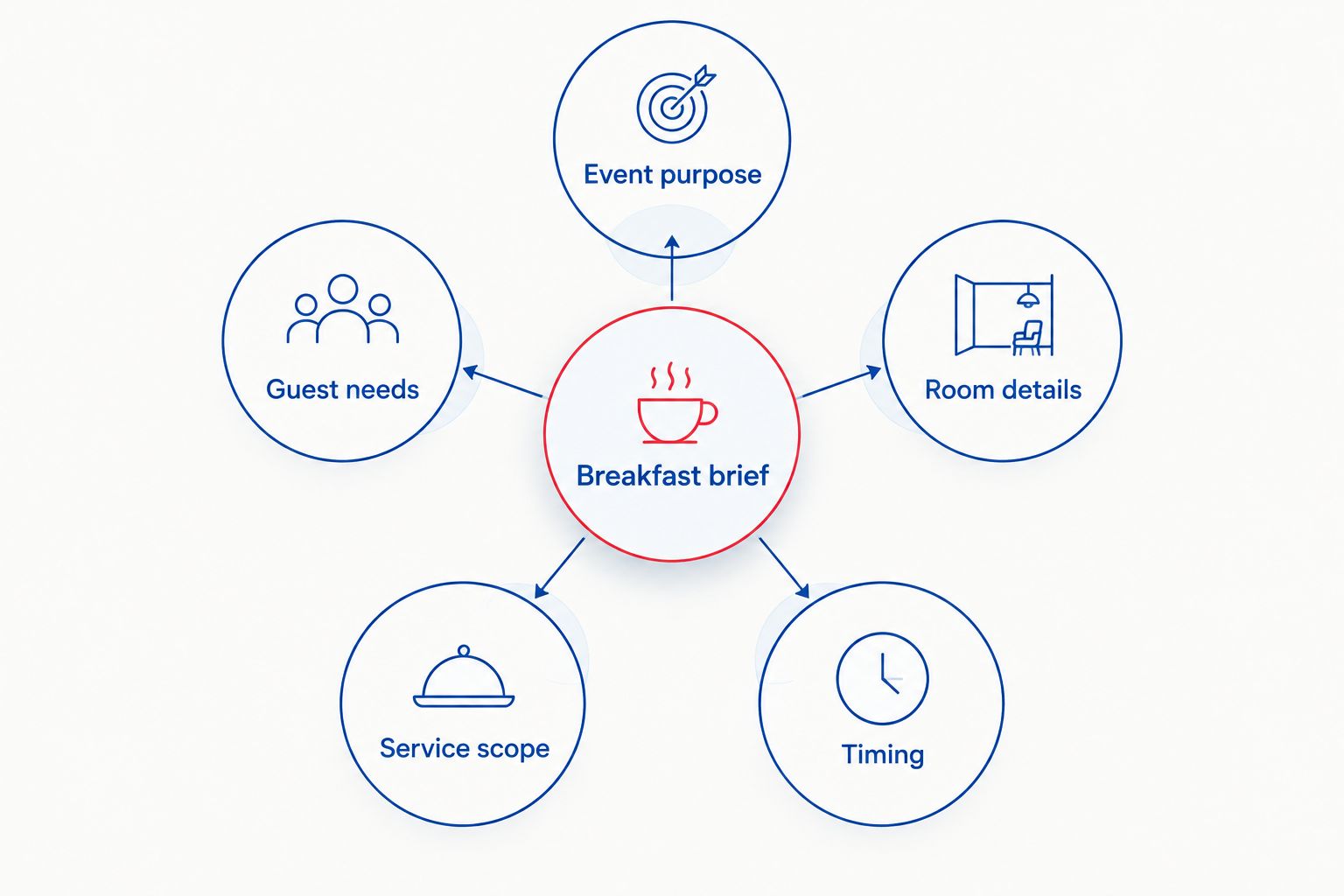
Before approaching Fork + Farm about breakfast catering in Calgary, prepare these details:
- Event purpose: Explain whether the morning is for work, connection, clients or recognition.
- Guest needs: Share the expected attendance and dietary requirements you have gathered.
- Room details: Describe seating, access and the space intended for service.
- Service scope: Ask what setup, service, equipment and clearing the proposed arrangement includes.
- Timing: Identify arrival, eating, meeting and finishing times separately.
These details turn a general enquiry into a useful conversation. They also help you distinguish the experience you want from practical arrangements that still need agreement.
Once the brief feels clear, get in touch to discuss your corporate occasion. Confirm the proposed menu, responsibilities and date directly before treating any arrangement as settled.
FAQ
What’s the best breakfast catering idea for a Calgary office meeting?
A meeting-first breakfast is the clearest default for an agenda-led office morning. Give guests a defined opportunity to eat, then make the transition into focused discussion explicit.
Does Fork + Farm cater corporate events in Calgary?
Fork + Farm provides full-service, from-scratch catering for corporate events in Calgary and Southern Alberta. Enquire directly about the breakfast format, menu and service arrangements for your occasion.
What should I include in a corporate breakfast catering enquiry?
Include the event purpose, date, expected attendance, venue details, dietary requirements and proposed schedule. Ask the caterer to clarify setup, service, equipment and clearing responsibilities.
Is a shared-table breakfast better than a staggered welcome?
Shared tables suit a group gathering together, while a staggered welcome suits different arrival times. Choose according to how your guests will attend rather than treating either format as universally better.
Can an office breakfast work for a Christmas celebration?
A breakfast can be planned as a corporate Christmas or year-end appreciation occasion. Keep recognition central, invite dietary requirements and consider colleagues with different schedules and traditions.
How do I plan breakfast catering for dietary requirements?
Gather dietary requirements before finalizing the catering plan and discuss them directly with your caterer. Confirm which requests can be accommodated, how meals will be identified and how relevant service questions will be handled.
What should I confirm before booking corporate breakfast catering?
Confirm the date, venue arrangements, menu, guest requirements and agreed service responsibilities. Make sure your event schedule reflects the setup, meal service and clearing arrangements discussed with the caterer.
One last thing
Read the invitation from a guest’s perspective before sending it. Does breakfast begin at the stated arrival time, or does the meeting begin then? That small distinction belongs in the invitation, not in an explanation at the door.
For your 2026 office breakfast, a thoughtful welcome starts before the first guest arrives.
Related guides
Planning a wedding alongside your corporate calendar? These guides explore a different kind of gathering:
- Wedding catering menu styles for Calgary celebrations
- Catering options for Calgary wedding venues
- Farm-to-table catering ideas for Calgary wedding receptions


